Why Off-the-Shelf SaaS Is Failing Growing Enterprises
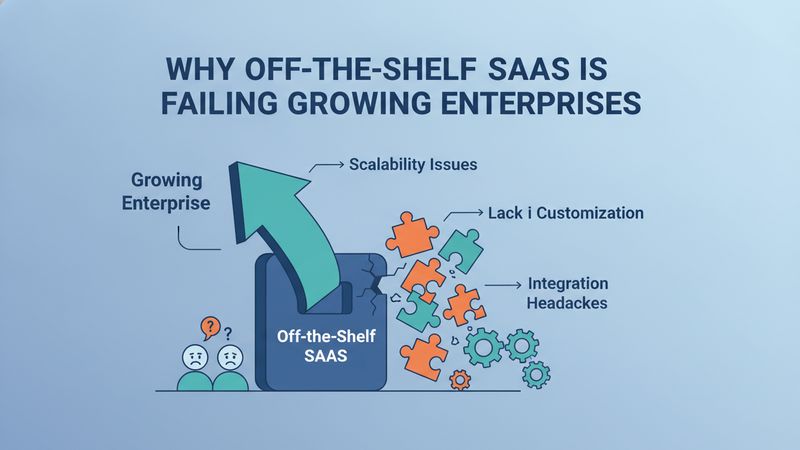
Rising SaaS costs and rigid tools force executives to rethink off-the-shelf apps. Discover why bespoke software delivers far superior operational ROI.
For more than a decade, standard operating procedure for business leaders across Canada was straightforward: when an operational bottleneck arises, buy an off-the-shelf software-as-a-service (SaaS) subscription. Standard platforms promised zero deployment overhead, instant scalability, and predictable operating expenses.
However, executive teams are confronting an uncomfortable reality: off-the-shelf software is no longer keeping pace with bespoke operational workflows. According to recent industry surveys, over 35% of mid-market and enterprise organizations have already begun replacing commercial SaaS subscriptions with custom-engineered applications, and nearly 78% plan to expand bespoke development initiatives. Standard platforms often force companies to bend their daily operations to fit rigid software constraints rather than supporting high-margin business models.
When standard solutions restrict customer experiences, bloat recurring software budgets, and fragment data across disconnected silos, relying exclusively on third-party SaaS transforms from a shortcut into an operational liability.
The Real Problem: The Hidden Costs of Operational Rigidity
Commercial software vendors design products to address the lowest common denominator across thousands of disparate clients. While this model delivers generic utility, growing enterprises inevitably hit structural friction as they scale:
- The Feature-Bloat Surcharge: Organizations regularly pay enterprise subscription tiers where teams utilize less than 30% of licensed modules. Meanwhile, essential proprietary workflows must still be patched together using messy spreadsheets, manual data entry, or fragile automation tools.
- Compounding Integration Overhead: Off-the-shelf platforms rarely talk seamlessly to existing legacy databases, local ERPs, or regulatory reporting stacks. Bridging these divides demands endless custom middleware and API maintenance, inflating total cost of ownership.
- Vendor Lock-In and Annual Renewal Shocks: Once proprietary client interactions and core operational records are locked inside commercial platforms, vendors steadily increase seat licenses while limiting flexibility.
Consider a mid-size logistics and distribution company based in the Greater Toronto Area. As their fulfillment network expanded across Ontario, their standard warehouse management subscription could not accommodate custom cross-docking rules and regional compliance reporting. Rather than speeding up operations, dispatchers spent hours manually re-keying manifests between tools. The business was paying top-tier subscription costs while paying full-time staff to execute manual workarounds.
The New Economics of Custom Software
Historically, developing proprietary internal software required massive capital outlay, years of architectural staging, and sprawling engineering departments. The financial equation behind the traditional "build versus buy" decision has fundamentally flipped.
Modern component-driven development, modular cloud frameworks, and API-first standards allow engineering teams to build, test, and deploy robust, tailored applications in weeks rather than quarters. Instead of paying indefinite subscription penalties for rigid tools, companies can own tailored software assets that align perfectly with their core competitive advantage.
Organizations adopting custom software architectures realize distinct operational advantages:
- Targeted Workflow Velocity: User interfaces and automation pipelines are tailored directly around company-specific milestones, eliminating superfluous clicks and boosting frontline employee throughput.
- Complete Data Sovereignty and Governance: With stricter compliance mandates across Canada—such as Ontario's evolving digital governance and privacy frameworks—holding full custody over sensitive operational records within dedicated infrastructure minimizes compliance risk.
- Long-Term Cost Containment: A single capital-efficient build replaces recurring per-seat monthly charges, resulting in a significantly lower three-year total cost of ownership.
How Business Leaders Should Evaluate Build vs. Buy
Transitioning away from SaaS sprawl does not require rebuilding every generic utility. Foundational services like payroll, payment processing, and basic email remain sensible commercial purchases. The strategic mandate is to identify where generic software is actively constraining enterprise valuation.
To establish an effective modernization roadmap, leadership teams should evaluate three primary indicators:
- Differentiating vs. Commodity Operations: If a business workflow drives revenue differentiation, proprietary customer satisfaction, or specialized supply chain speed, it should never be constrained by a third-party software roadmap. Build custom software where you differentiate; buy off-the-shelf only where processes are entirely standardized.
- Total Cost of Ownership Audit: Calculate the true multi-year cost of existing software contracts, factoring in licensing fees, third-party connector tools, integration maintenance, and employee hours spent on manual workarounds.
- Scalability and Extensibility: Ensure that new digital investments are built with modular architectures that can expand effortlessly as business volume doubles, avoiding painful migrations down the line.
Taking the Next Step Toward Digital Independence
Escaping the constraints of generic SaaS does not require months of downtime or risky multi-million-dollar overhauls. By launching focused, high-impact web and mobile applications tailored to mission-critical workflows, companies can eliminate software bloat and establish a lasting competitive edge.
Navigating this transformation requires a technical partner that focuses on business outcomes rather than engineering jargon. Based in Toronto, Arepitas Technologies Inc specializes in engineering custom enterprise software, modern web portals, and scalable cloud applications that streamline operations and replace bloated SaaS stacks.
Explore our full suite of software modernization and engineering services to discover how tailor-made technology can optimize your company's workflows and maximize operational ROI.
Sources
Need help with enterprise software?
Arepitas Technologies Inc helps companies in Toronto build software, AI features, and digital products that scale.
Book a Free ConsultationRelated Articles
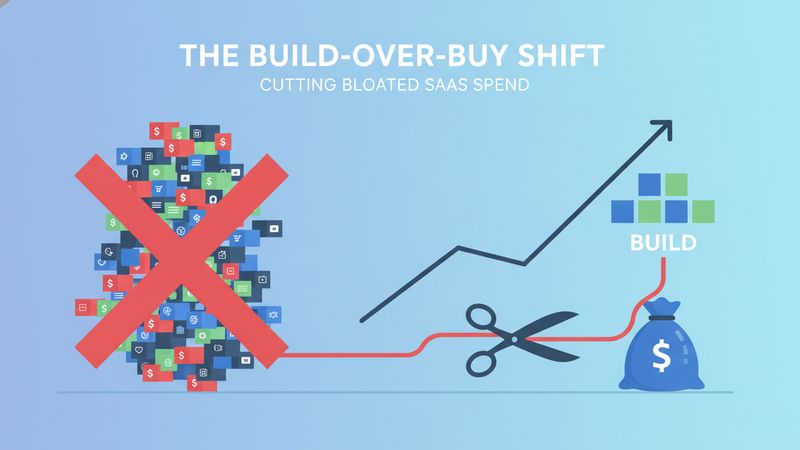
The Build-Over-Buy Shift: Cutting Bloated SaaS Spend
Discover why Canadian mid-market leaders are replacing redundant SaaS subscriptions with targeted custom internal tools to eliminate seat-tax bloat and boost ROI.
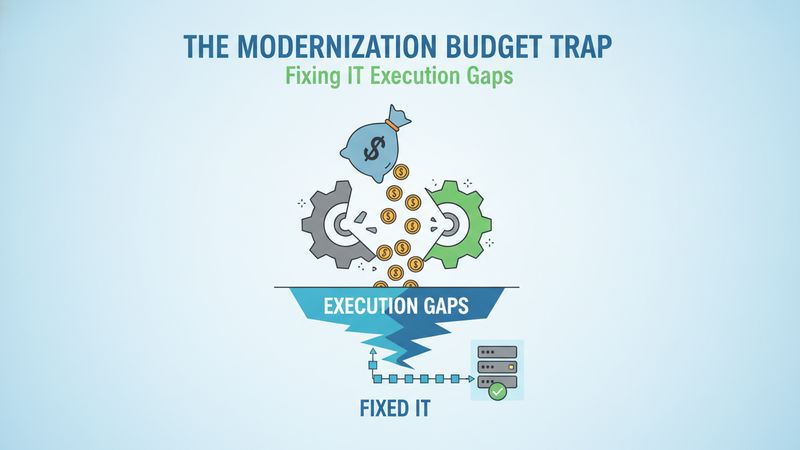
The Modernization Budget Trap: Fixing IT Execution Gaps
Over 70% of enterprise modernizations blow past budgets. Discover why Canadian mid-market leaders are shifting from monolithic overhauls to targeted execution.
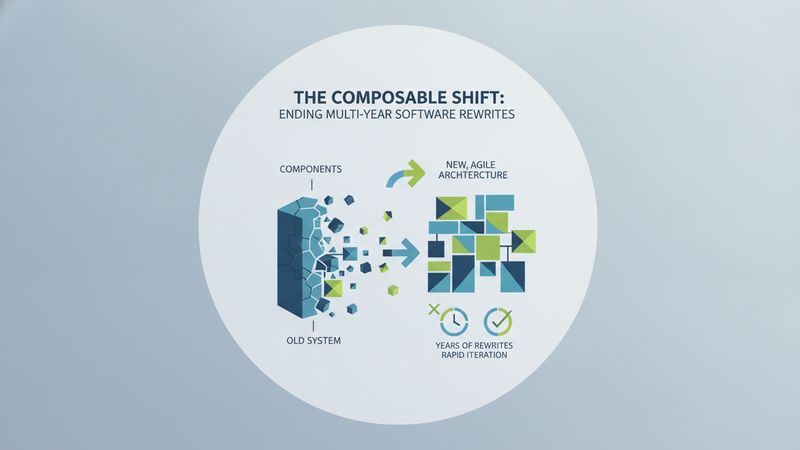
The Composable Shift: Ending Multi-Year Software Rewrites
Discover how composable enterprise software helps Toronto leaders modernize legacy workflows incrementally, cutting cycle times and avoiding costly overhauls.