The Modernization Budget Trap: Fixing IT Execution Gaps
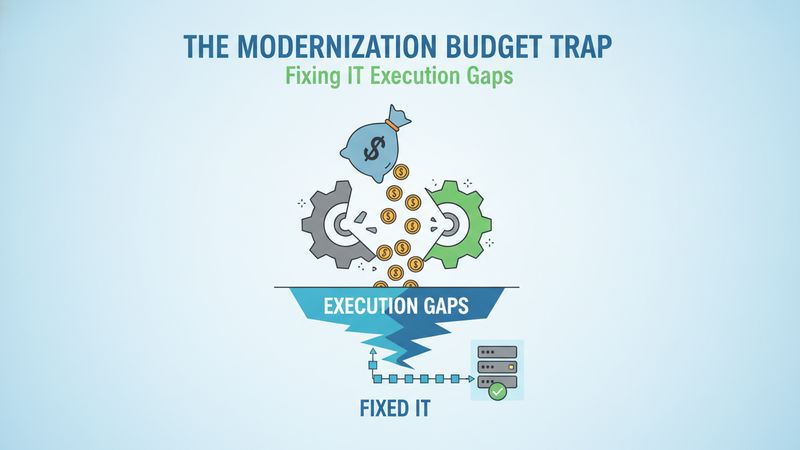
Over 70% of enterprise modernizations blow past budgets. Discover why Canadian mid-market leaders are shifting from monolithic overhauls to targeted execution.
For mid-market and enterprise leadership, modernizing critical software has historically felt like navigating an open-ended financial commitment. According to the State of IT Modernization 2026 Report, 71% of organizations exceeded their modernization budgets over the past two years, with 27% running over by more than half. Even more concerning, 61% of companies were forced to pause, scale back, or completely abandon core modernization projects due to mounting complexity and unpredictable costs.
In Canada, where mid-market companies face tight capital allocations and increasing competitive pressure, technology spending without demonstrable returns is no longer tolerated. Recent research from BDO Canada reveals that 45% of Canadian organizations are investing heavily in new digital solutions without realizing meaningful ROI, while nearly one-third are actively delaying capital upgrades due to execution risk.
The issue is rarely the technology itself. Instead, the breakdown happens during execution: business leaders fall into the "modernization budget trap," attempting monolithic system overhauls that paralyze day-to-day operations rather than delivering continuous, modular business value.
Why Legacy Modernization Initiatives Stalls Budgets
Modernization fails when companies approach decades-old systems with an all-or-nothing mindset. Legacy core applications—ranging from proprietary ERPs to bespoke inventory management platforms—harbor intricate business logic developed over years. When leadership attempts a broad, unconstrained rewrite, three primary failure points emerge:
- Undocumented Dependency Sprawl: Decades of ad-hoc fixes, undocumented database triggers, and third-party plugins create a web of hidden dependencies. When engineering teams begin modernizing without clear structural visibility, discovery timelines balloon, consuming up to 30% of the allocated budget before a single production line of code is deployed.
- The Big-Bang Delivery Illusion: Planning 18-month multi-phase rollouts assumes business requirements stay static. By the time the new system is ready for user acceptance testing, market conditions have shifted, operational requirements have evolved, and the software is already misaligned with actual workflow needs.
- Workflow Disconnect: Upgrading back-end databases or rehosting applications in the cloud without redesigning the frontline operational experience fails to yield efficiency gains. As highlighted by the Business Development Bank of Canada (BDC), digital transformation generates up to 38% higher productivity only when technology is deeply embedded into operational execution.
Real-World Impact: The Ontario Supply Chain Pivot
Consider a mid-market manufacturing and distribution company based in Vaughan, Ontario. Handling over 50,000 monthly SKU shipments across North America, the company relied on an on-premise, 15-year-old relational database and a green-screen terminal interface for warehouse fulfillment.
Faced with customer demands for real-time inventory tracking and automated self-service portals, the company initially contracted a large enterprise vendor for a complete, 24-month core platform overhaul budgeted at $1.8 million. Fourteen months in, the initiative had consumed $1.4 million with zero production features delivered, while critical edge cases around custom client pricing and hazardous material compliance remained unresolved.
Recognizing the risk of total project failure, the leadership team paused the monolithic deployment and adopted a modular modernization strategy:
- API Decoupling: Instead of replacing the core transactional database immediately, developers built a lightweight, secure API wrapper around legacy endpoints.
- Targeted Digital Experience: A custom, web-based fulfillment portal was launched in eight weeks, giving warehouse supervisors mobile scanning capabilities without disrupting back-office invoicing.
- Self-Service Customer Layer: Client-facing order management features were deployed incrementally in 30-day sprints.
Within four months of shifting strategy, order processing cycle times dropped by 34%, customer order inquiries fell by 45%, and the remaining scope was completed under the revised budget ceiling.
How Business Leaders Can Protect Modernization ROI
To bypass budget traps and drive tangible operational speed, executive teams should implement three disciplined management principles:
1. Mandate Vertical Slice Delivery
Reject software roadmaps that promise business value only after 12 to 18 months of infrastructure preparation. Demand "vertical slice" iterations where discrete operational functions—such as billing automation, automated quoting, or dispatch scheduling—are designed, integrated, and deployed into active production within 60 to 90 days. This creates early payback loops and validates architecture decisions under real workload conditions.
2. Isolate Core Logic with Modern API Layers
Do not attempt to replace legacy transactional records and modern user interfaces simultaneously. By building dedicated API gateways and integration layers, enterprises can introduce high-performance modern web apps, mobile tools, and automated workflows while preserving the stability of legacy core data layers.
3. Establish Concrete FinOps and Milestone Governance
Track software delivery against measurable operational metrics—such as hours saved per transaction, reduction in manual error re-entries, or API response latency—rather than arbitrary task completion milestones. Tie development vendor billings directly to verified staging and production release gates.
Modernize with Confidence
Modernization should be a driver of operational agility, not an endless source of capital depletion. Business leaders across Toronto and Canada need practical development partners who understand how to extract maximum value from existing systems while systematically eliminating technical risk.
At Arepitas Technologies Inc, based in Toronto, we partner with mid-market businesses to plan, design, and execute high-impact digital initiatives. Whether you are seeking to modernize legacy back-ends, eliminate manual data bottlenecks, or build scalable internal tooling, explore our end-to-end custom software development services to deliver measurable ROI on time and within budget.
Sources
Need help with enterprise software?
Arepitas Technologies Inc helps companies in Toronto build software, AI features, and digital products that scale.
Book a Free ConsultationRelated Articles
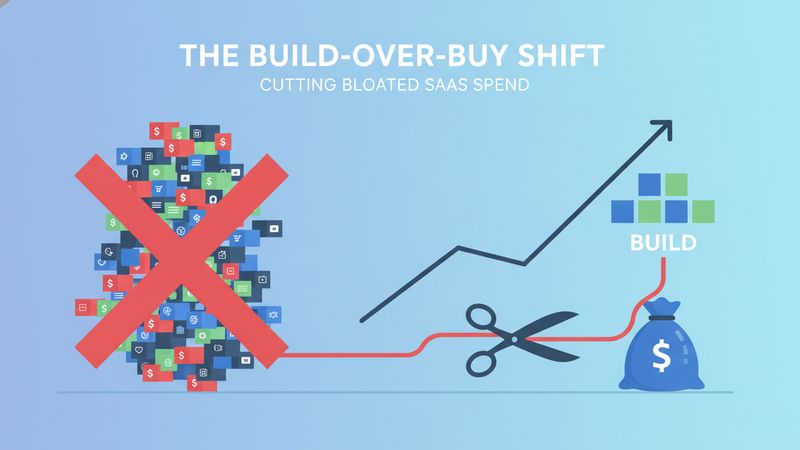
The Build-Over-Buy Shift: Cutting Bloated SaaS Spend
Discover why Canadian mid-market leaders are replacing redundant SaaS subscriptions with targeted custom internal tools to eliminate seat-tax bloat and boost ROI.
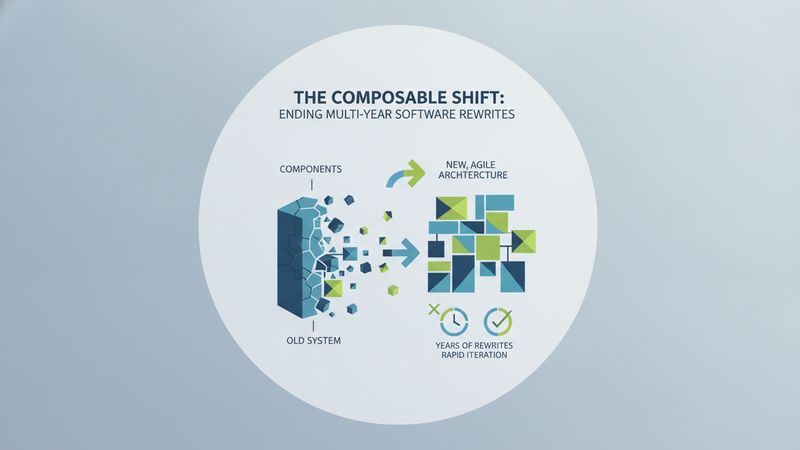
The Composable Shift: Ending Multi-Year Software Rewrites
Discover how composable enterprise software helps Toronto leaders modernize legacy workflows incrementally, cutting cycle times and avoiding costly overhauls.
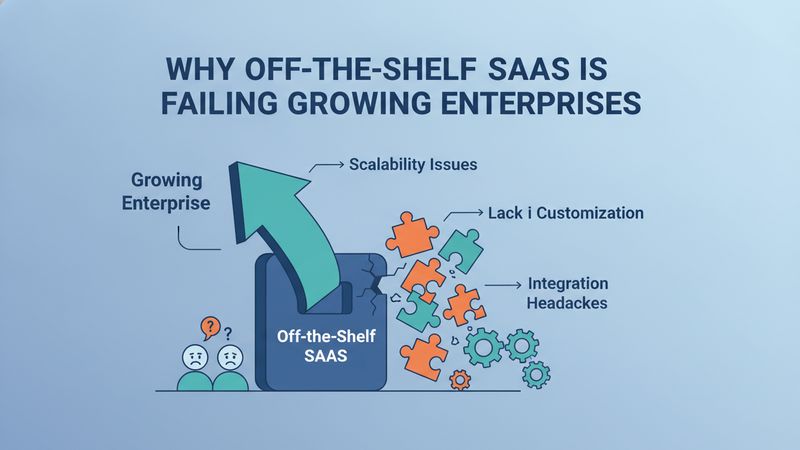
Why Off-the-Shelf SaaS Is Failing Growing Enterprises
Rising SaaS costs and rigid tools force executives to rethink off-the-shelf apps. Discover why bespoke software delivers far superior operational ROI.