The Composable Shift: Ending Multi-Year Software Rewrites
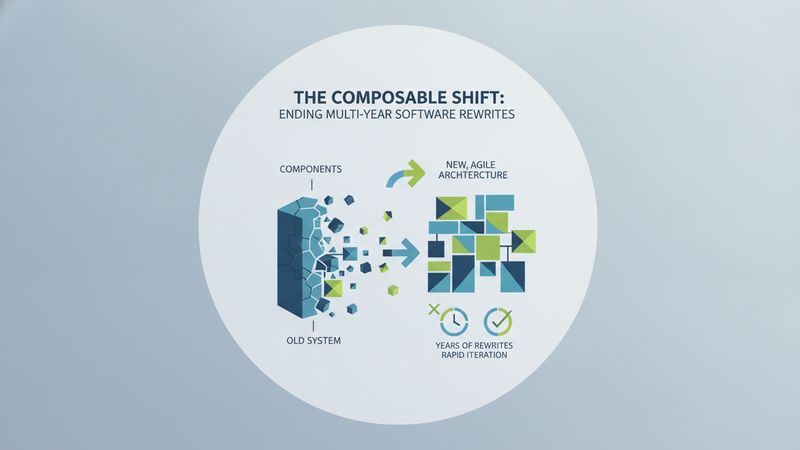
Discover how composable enterprise software helps Toronto leaders modernize legacy workflows incrementally, cutting cycle times and avoiding costly overhauls.
For executive leadership across Ontario and Canada, the software dilemma is familiar: core business systems are becoming too rigid to support agile operations, yet initiating a massive, multi-year software replacement carries unacceptable execution risk. According to recent cross-industry benchmarks published by Savvycom Research, roughly 65% of large-scale enterprise transformation initiatives fail to achieve their projected return on investment, primarily because monolithic systems freeze business operations during extended implementation cycles. To solve this, mid-market and enterprise organizations are turning to composable enterprise software—an architectural approach that replaces all-or-nothing system replacements with modular, interchangeable business capabilities.
When operations directors and CTOs shift from monolithic platforms to composable architectures, they decouple core business functions like billing, inventory management, and customer onboarding into autonomous services connected through governed APIs. This eliminates the paralyzing technical dependencies that drag down executive timelines and turn quarterly roadmap priorities into multi-year backlog items.
The Real Cost of All-or-Nothing System Overhauls
Monolithic architectures create a compounding tax on executive speed. When legacy systems tie database schemas, business logic, and user interfaces into a single interdependent codebase, a simple change to a regional pricing model or onboarding flow requires extensive regression testing across the entire platform. Over time, product velocity slows to a crawl.
Consider a mid-size logistics and distribution company based in the Greater Toronto Area (GTA). Managing hundreds of daily supply shipments across Ontario and Quebec, the company relied on an aging enterprise resource planning (ERP) system. Whenever operations needed to adjust dispatch routing rules or integrate a new client portal, internal IT teams faced an estimated six-month deployment timeline due to tightly coupled legacy database tables. The executive team initially considered a full, $2.5-million ERP overhaul, but faced a projected 18-to-24 month window before realizing any functional improvement.
This scenario reflects findings from Gartner's 2026 Enterprise Applications Priorities, which emphasizes that application leaders must prioritize continuous portfolio rationalization and incremental modernization over risky, wholesale application replacements. Tying up capital in multi-year migration projects leaves business units vulnerable to market shifts while everyday operational bottlenecks persist.
Why Composable Software Architecture Generates Rapid ROI
Composable architecture treats software systems like modular building blocks rather than rigid monoliths. By breaking complex enterprise applications into discrete, API-driven components, business leaders can modernize individual business capabilities without destabilizing the broader infrastructure.
Key operational benefits include:
- Compressed Time-to-Value: Rather than waiting two years for a total platform migration, businesses deploy high-impact micro-services in 60-to-90 day increments, capturing cost savings and operational gains immediately.
- Targeted Capital Allocation: Budgets can be directed specifically toward underperforming workflows—such as automated invoice reconciliation or order intake—without paying for broad software features the organization does not need.
- Reduced Vendor and Code Lock-In: When individual modules are decoupled through standardized interfaces, replacing an obsolete component or integrating third-party AI services does not require rebuilding core business systems.
- Streamlined Enterprise Governance: Security, audit tracking, and role-based permissions can be enforced at the API layer, giving managers unified operational visibility across both legacy and modern tools.
According to an analysis on operational ROI by Wise Hustlers, structured modular modernization initiatives deliver substantially higher project success rates than monolithic rebuilds, precisely because scope is managed around measurable business outcomes rather than infrastructure overhauls.
A Pragmatic Roadmap for Canadian Enterprise Leaders
Transitioning to composable enterprise software does not mean throwing away current investments. Instead, it requires a deliberate, iterative modernization strategy that preserves core operational continuity.
1. Identify Workflow Friction Points
Audit departmental operations to pinpoint the highest-friction handoffs. Look for workflows where teams rely heavily on manual data re-entry, spreadsheets, or slow approval chains to bridge disparate tools. These high-friction friction points represent the quickest opportunities for modular software intervention.
2. Implement the Strangler Fig Pattern
Rather than executing a risky cutover, use the proven "strangler fig" modernization pattern. Build modern, specialized services around the edges of your legacy system, exposing core databases via clean APIs. As new composable services take over specific business functions, legacy modules can be decommissioned incrementally without business disruption.
3. Standardize API Contracts and Data Governance
Ensure that every modular component adheres to consistent data formats and security protocols. Centralized API gateways and data validation layers prevent composable architectures from descending into fragmented shadow IT, ensuring compliance with Canadian data governance and reporting requirements.
Partnering for Seamless Enterprise Modernization
Executing a composable software transformation requires both deep architectural expertise and a thorough understanding of operational workflows. Building the internal capability to decouple legacy monoliths while maintaining day-to-day business operations is often the biggest hurdle Canadian companies face.
Based in Toronto, Arepitas Technologies Inc helps enterprises navigate this transition. By engineering custom digital solutions, API layers, and modular software architectures, Arepitas Technologies enables organizations to modernize mission-critical systems without the risk and expense of multi-year rewrites. Explore our end-to-end development services to see how modular software modernization can unlock operational agility for your business.
Sources
Need help with enterprise software?
Arepitas Technologies Inc helps companies in Toronto build software, AI features, and digital products that scale.
Book a Free ConsultationRelated Articles
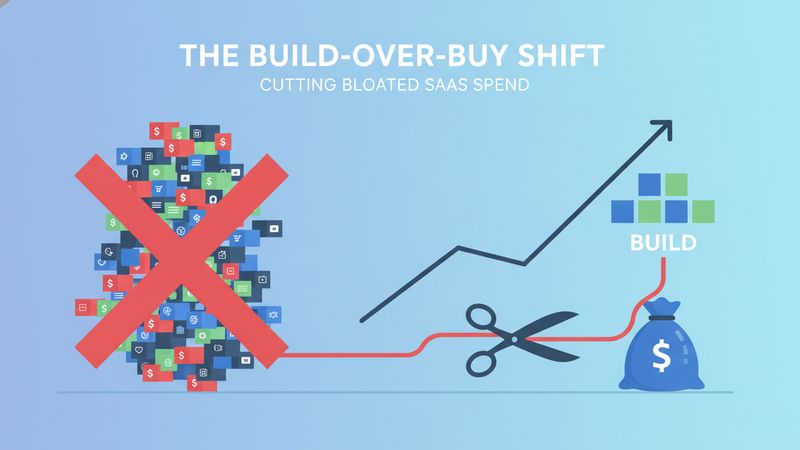
The Build-Over-Buy Shift: Cutting Bloated SaaS Spend
Discover why Canadian mid-market leaders are replacing redundant SaaS subscriptions with targeted custom internal tools to eliminate seat-tax bloat and boost ROI.
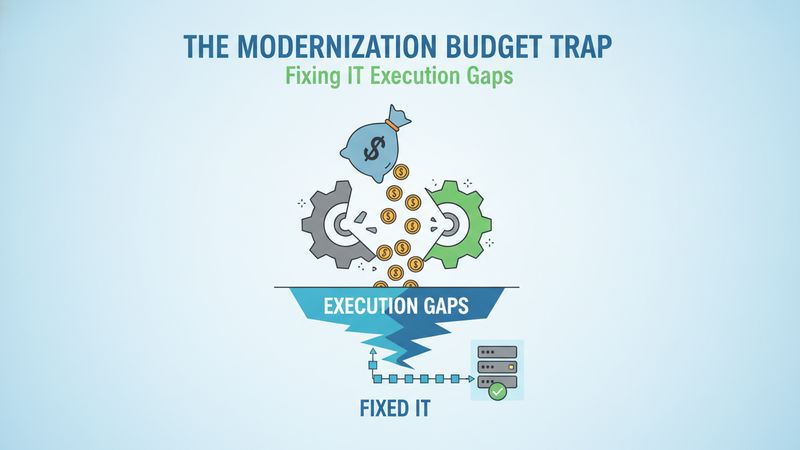
The Modernization Budget Trap: Fixing IT Execution Gaps
Over 70% of enterprise modernizations blow past budgets. Discover why Canadian mid-market leaders are shifting from monolithic overhauls to targeted execution.
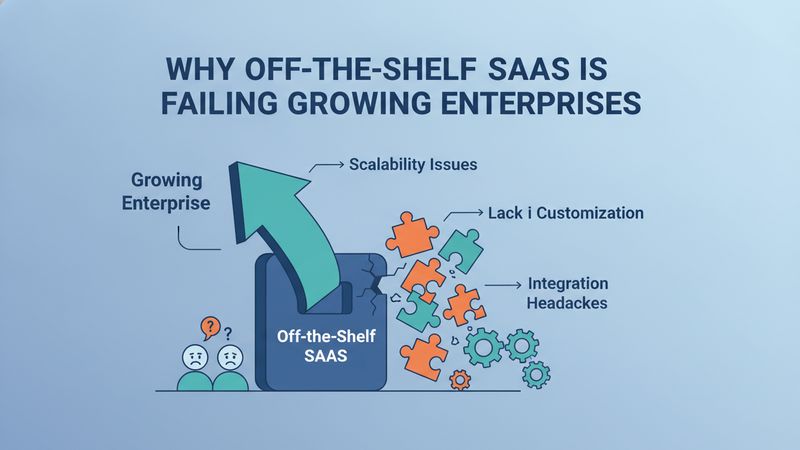
Why Off-the-Shelf SaaS Is Failing Growing Enterprises
Rising SaaS costs and rigid tools force executives to rethink off-the-shelf apps. Discover why bespoke software delivers far superior operational ROI.