The Build-Over-Buy Shift: Cutting Bloated SaaS Spend
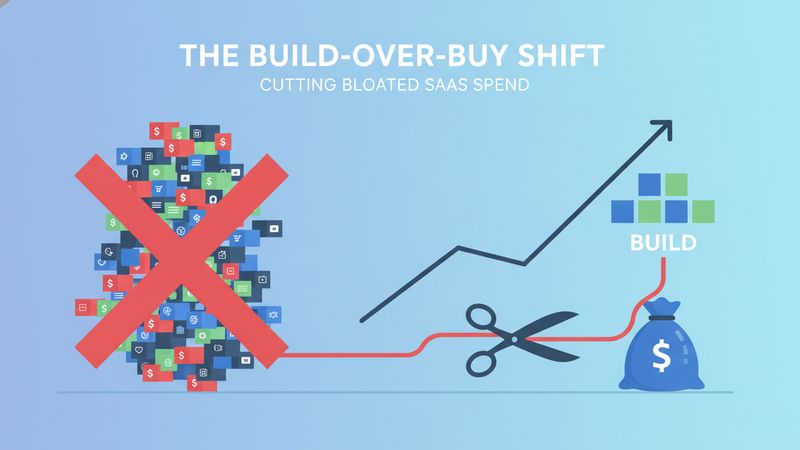
Discover why Canadian mid-market leaders are replacing redundant SaaS subscriptions with targeted custom internal tools to eliminate seat-tax bloat and boost ROI.
For over a decade, executive playbooks dictated a simple rule: never build what you can buy off the shelf. That logic made sense when custom engineering meant twelve-month development cycles and seven-figure commitments. But in 2026, the economics of software ownership have reversed. Enterprise software license costs are projected to climb over 14% this year, while companies routinely use less than half of the software features they pay for. As mid-market leadership teams face rising per-seat subscription models and endless integration bottlenecks, forward-thinking organizations are pivoting to custom internal tools to regain operational control and eliminate recurring vendor tax.
Recent industry surveys reveal that 78% of technology teams expect to build more of their own purpose-built tools this year, with more than a third having already replaced at least one legacy SaaS vendor with a proprietary build. The build-over-buy shift is no longer an engineering vanity project; it is an executive strategy for protecting operating margins, automating proprietary workflows, and creating defensible competitive advantage.
The Real Cost of Generic Subscription Stacks
Off-the-shelf software promises fast deployment, but fast setup often leads to long-term operational friction. A mid-market logistics or financial services company in Toronto, for example, typically operates across dozens of discrete cloud platforms. Sales works in one CRM, operations coordinates fulfillment in another, and finance reconciles billing across disconnected spreadsheets.
This fragmentation introduces three compounding business liabilities:
- The Subscription Escalator: SaaS providers increasingly monetize through mandatory feature tiers, per-seat licensing, and unvetted AI add-ons that drive up annual contract values without delivering measurable productivity.
- Process Compromise: When your competitive advantage relies on a proprietary fulfillment or client-onboarding process, shoehorning your business into rigid vendor schemas forces your team into manual workarounds and error-prone duplicate data entry.
- Integration Fragility: Maintaining brittle third-party connectors and point-to-point APIs across twenty distinct vendors creates hidden engineering overhead and exposes customer data to unnecessary security vulnerabilities.
According to research from Newsweek, the cost floor for deploying resilient, tailored software has collapsed. What once required extensive infrastructure and multi-quarter cycles can now be deployed in weeks, allowing companies to replace thousands of dollars in monthly seat licensing with a clean, owned operational asset.
Why Lean Internal Tooling Delivers Compounding ROI
Moving toward custom business applications is not about reinventing commoditized infrastructure like core email or general ledger accounting. Instead, high-performing executives focus on unifying the core workflows that make their company unique.
As highlighted in Forbes, the primary return on modern software engineering comes from reducing coordination friction across departments rather than adding more external point solutions. When mid-market leaders consolidate fractured SaaS layers into purpose-built internal portals, the benefits directly impact bottom-line metrics:
1. Eliminating Seat-Based Operational Penalties
Generic enterprise software penalizes your business as it scales. Adding seasonal contractors, field technicians, or partner agencies frequently triggers costly seat upgrades. A custom-engineered management hub or workflow engine allows your business to grant secure access across unlimited internal and external users without recurring subscription spikes.
2. Tailoring Software to Real-World Operations
Instead of paying staff to spend hours translating data between disparate tools, a purpose-built application matches the exact hand-offs of your operational workflow. Operational cycle times drop dramatically because employees interact with unified dashboards designed specifically around company KPIs rather than generic third-party interfaces.
3. Securing Intellectual Property and Data Privacy
In Canada, stringent compliance requirements and data residency concerns mean that scattering sensitive customer information across dozens of third-party vendors creates regulatory exposure. Custom platforms centralize governance, ensure data sovereignty, and give your enterprise full ownership of the intellectual property powering your operations.
Strategic Framework: How to Execute a Build-Over-Buy Audit
Before initiating a consolidation program, leadership teams must evaluate their existing technology investments through a clear business lens. Transitioning from SaaS fatigue to streamlined internal software requires a structured approach:
- Audit License Utilization vs. Real Workflow Value: Identify subscription tools where your teams use less than 20% of native features but pay full tier rates. These are prime candidates for lean replacement.
- Isolate High-Friction Operational Hand-Offs: Pinpoint where employees lose the most hours manually copying data, managing approvals over email, or reconciling conflicting reports.
- Build Modularly Around Core Data Models: Modern engineering favors composable, modular builds over massive monolithic projects. Start by replacing a single high-cost point solution or manual spreadsheet process with a tailored dashboard connected directly to your existing databases.
- Measure Direct Payback Timelines: Modern custom builds for mid-market operations routinely pay for themselves within 6 to 12 months simply through canceled software licenses and recovered team capacity.
Building for Longevity and Operational Resilience
The companies winning in today’s competitive Canadian economy are not the ones with the largest SaaS invoices; they are the ones with the most agile, unified operational platforms.
Navigating this transition requires practical software architecture, proven integration expertise, and an understanding of operational efficiency. As a Toronto-based technology partner, Arepitas Technologies Inc helps mid-market companies and ambitious enterprises audit bloated software ecosystems, modernize mission-critical workflows, and build high-performance custom internal tools.
Explore our tailored engineering and modernization capabilities through our comprehensive /services to turn disconnected software costs into permanent enterprise value.
Sources
Need help with enterprise software?
Arepitas Technologies Inc helps companies in Toronto build software, AI features, and digital products that scale.
Book a Free ConsultationRelated Articles
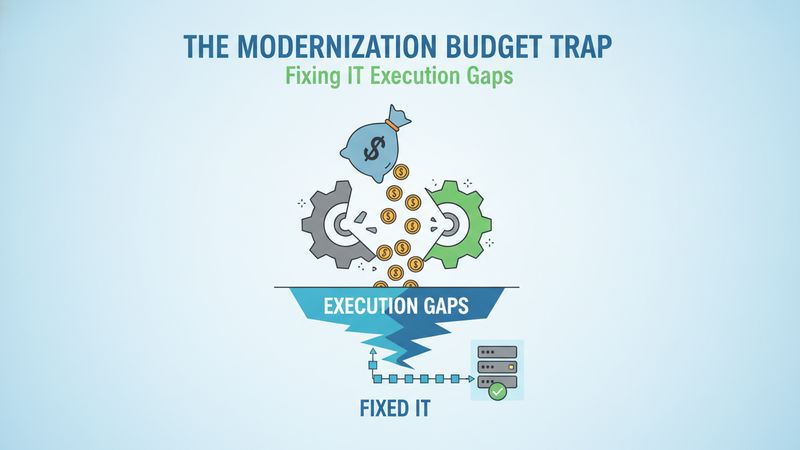
The Modernization Budget Trap: Fixing IT Execution Gaps
Over 70% of enterprise modernizations blow past budgets. Discover why Canadian mid-market leaders are shifting from monolithic overhauls to targeted execution.
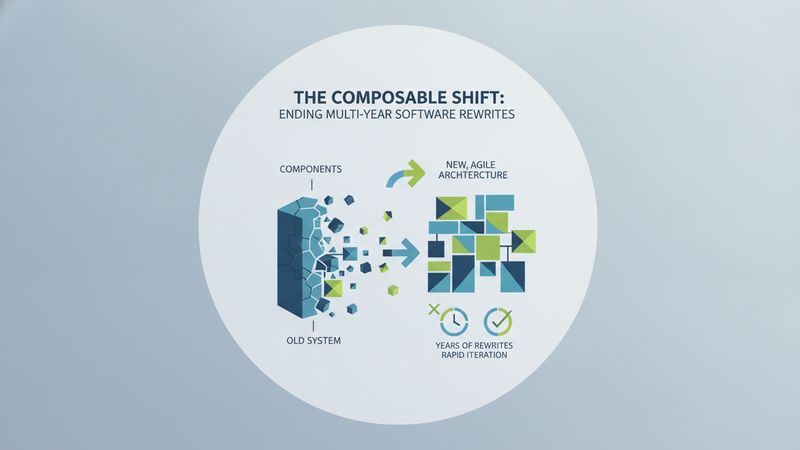
The Composable Shift: Ending Multi-Year Software Rewrites
Discover how composable enterprise software helps Toronto leaders modernize legacy workflows incrementally, cutting cycle times and avoiding costly overhauls.
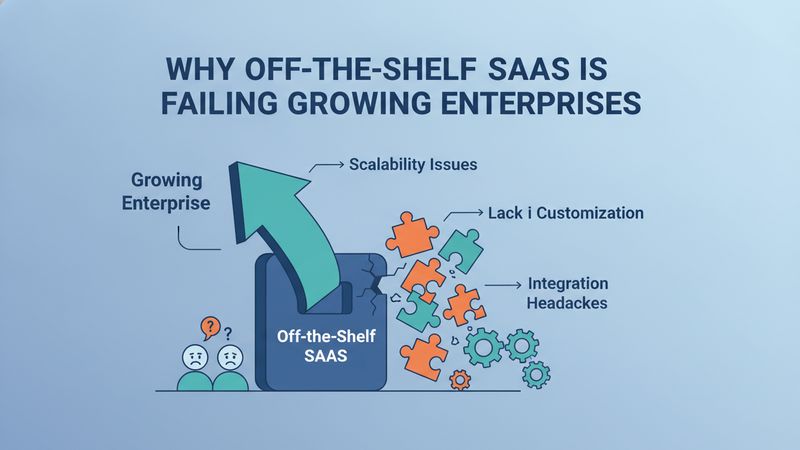
Why Off-the-Shelf SaaS Is Failing Growing Enterprises
Rising SaaS costs and rigid tools force executives to rethink off-the-shelf apps. Discover why bespoke software delivers far superior operational ROI.