The Tech Debt Tax: Why 40% of Engineering Payroll Is Lost
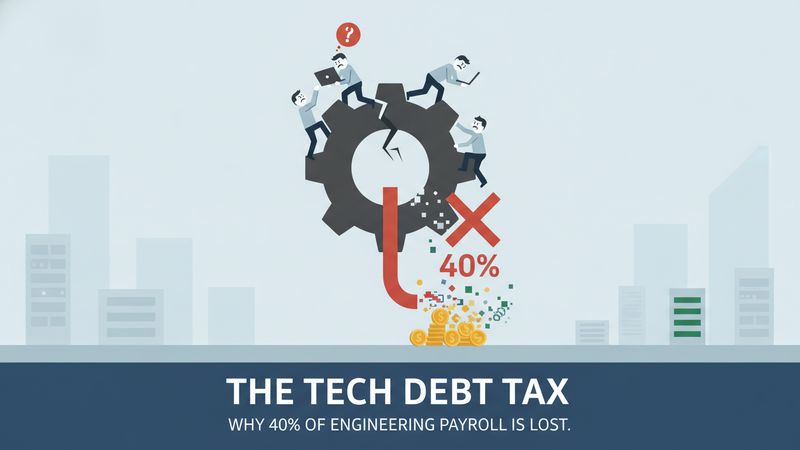
Unaddressed technical debt burns over 40% of engineering payroll. Discover how Canadian leaders can reclaim trapped budgets and accelerate product delivery.
Every executive review begins with a variation of the same frustrating question: why is our product roadmap moving so slowly when our software payroll has never been higher? Across mid-sized and enterprise companies in Canada, executives are realizing that their technology investments are producing diminishing returns. The core issue is rarely a lack of developer talent or missing project management tools. Instead, businesses are paying an invisible, compounding levy on every line of code: the technical debt tax.
Recent research from Deloitte reveals that unmanaged technical debt severely suppresses an organization's latent value, effectively trapping capital that has already been paid for. Meanwhile, benchmarks published by the Software Improvement Group (SIG) and developer workforce studies demonstrate that engineers lose between 23% and 42% of their working hours simply servicing legacy architectural shortcuts and fragile codebases. For a growing mid-market business with an annual development payroll of $2 million, that translates to upwards of $800,000 vanished every year into routine firefighting rather than strategic innovation.
The Hidden Layers Draining Your Technology Budget
Technical debt is often mischaracterized as purely an engineering preference for cleaner code. For executives, however, it is a balance sheet and operational risk that impacts the business across four distinct layers:
- The Direct Payroll Sink: When systems lack modular architecture, even minor feature updates require navigating thousands of lines of intertwined logic. Developers spend half their sprint diagnosing regressions and writing temporary patches, turning full-time talent into high-priced maintenance workers.
- Roadmap Paralysis and Opportunity Cost: A feature that should take three weeks stretches into six months because changing one module risks destabilizing three others. In competitive sectors across Ontario, this delay allows nimbler competitors to capture market share while incumbent teams remain stuck in deployment triage.
- Senior Talent Burnout and Attrition: Top engineering talent seeks environments where they can build scalable systems. When senior developers spend their days untangling undocumented workarounds, job satisfaction drops and turnover rises, triggering expensive recruiting cycles.
- Valuation and Due Diligence Penalties: In 2026, venture capital firms, private equity buyers, and enterprise clients actively audit software health during diligence. High technical debt directly reduces business valuations and delays M&A transactions.
Real-World Scenario: The Mid-Market Bottleneck in Toronto
Consider a mid-sized supply chain and logistics provider headquartered in the Greater Toronto Area. Over five years of rapid regional expansion across Ontario and Quebec, the company rapidly layered custom order-routing logic, client billing portals, and inventory spreadsheets onto an aging monolithic application.
On paper, the IT budget looked standard. However, when leadership attempted to launch a self-serve mobile dashboard for enterprise clients, the initiative stalled for eight months. Every modification to the billing engine threatened to bring down the real-time dispatch queue. Customer churn rose by 12% due to delayed features, and the engineering department was forced to allocate 75% of every sprint solely to emergency defect remediation. The business was not suffering from lack of market demand; it was bottlenecked by its own accumulated code debt.
Practical Steps to Eliminate the Tech Debt Drag
Recovering trapped technology value does not require shutting down business operations for a risky multi-million-dollar rebuild. Progressive organizations adopt structured modernization practices to systematically buy down debt while continuing to deliver customer value:
1. Translate Technical Friction into Financial Metrics
Stop reviewing technical debt as a list of abstract bugs. Frame technical liabilities in terms of cycle time, hours spent on non-revenue maintenance, and feature lead time. When executive leadership and finance understand that fixing a core service will cut sprint cycles by 30%, capital allocation becomes straightforward.
2. Implement the 80/20 Modernization Rule
Avoid the temptation of "big-bang" system rewrites, which frequently exceed budgets and fail to deliver. Instead, mandate that 20% of every development sprint is reserved for refactoring high-friction modules and improving automated test coverage around critical business logic. Over three to six months, this compounding effort dramatically improves delivery velocity.
3. Decouple Core Business Systems Using APIs
Rather than attempting to replace mission-critical backend systems overnight, wrap legacy systems in clean, secure API layers. This allows product teams to build fast, modern web and mobile experiences without being constrained by legacy databases or fragile backends.
Building for Sustainable Growth
Technical debt is an inevitable consequence of shipping products fast, but leaving it unmanaged turns a calculated short-term tradeoff into a long-term commercial liability. Business leaders who actively audit their software health and invest in strategic refactoring recover up to half of their trapped engineering potential, unlocking the agility needed to outpace the market.
As a Toronto-based software engineering and modernization partner, Arepitas Technologies Inc helps growing enterprises and mid-market organizations audit legacy codebases, eliminate architectural bottlenecks, and build reliable custom applications. Explore how our engineering team can modernize your software infrastructure by visiting our Services page.
Sources
Need help with tech leadership & strategy?
Arepitas Technologies Inc helps companies in Toronto build software, AI features, and digital products that scale.
Book a Free ConsultationRelated Articles
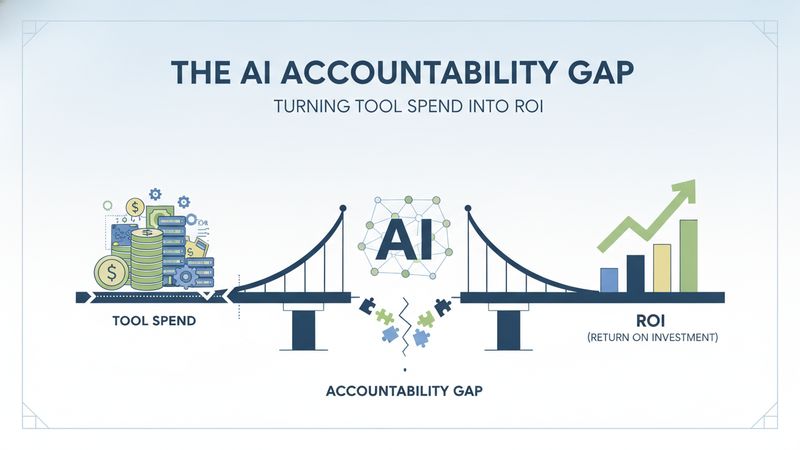
The AI Accountability Gap: Turning Tool Spend Into ROI
Canadian companies are spending 12x more on AI tools, but ad-hoc adoption is stalling ROI. Here is how executives bridge the AI accountability gap in 2026.
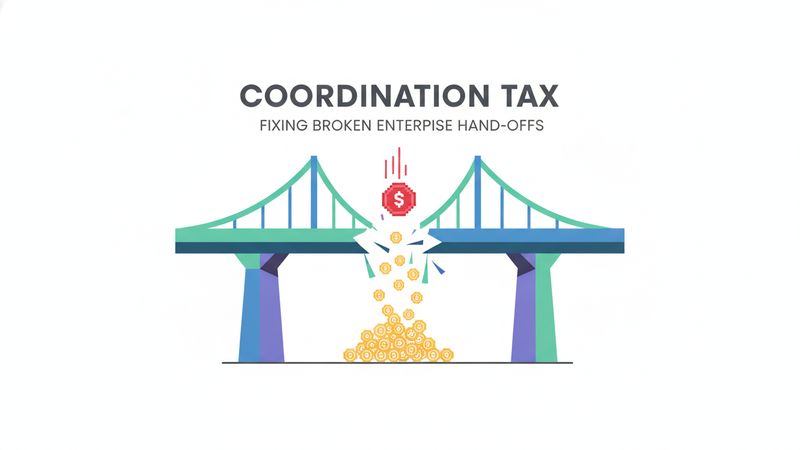
The Coordination Tax: Fixing Broken Enterprise Hand-Offs
Discover why the enterprise coordination tax stalls digital ROI and how Canadian leaders can automate cross-team hand-offs to protect operating margins.
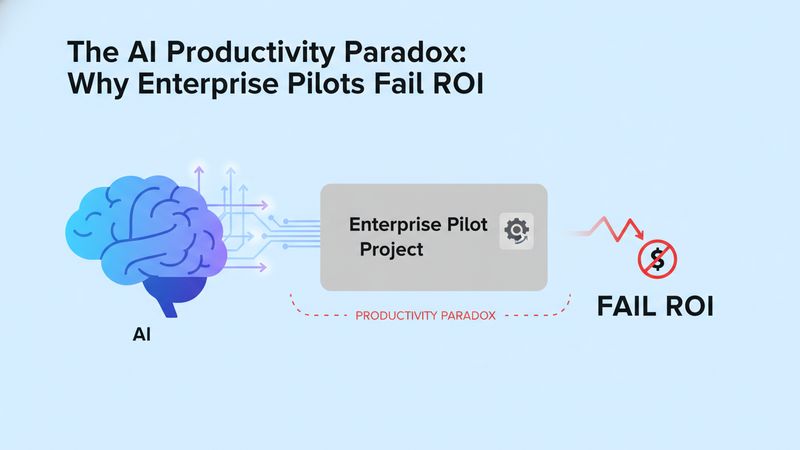
The AI Productivity Paradox: Why Enterprise Pilots Fail ROI
Canadian businesses are pouring millions into digital pilots, yet only 18% see real ROI. Here is how leaders turn experimentation into actual workflow gains.