The AI Productivity Paradox: Why Enterprise Pilots Fail ROI
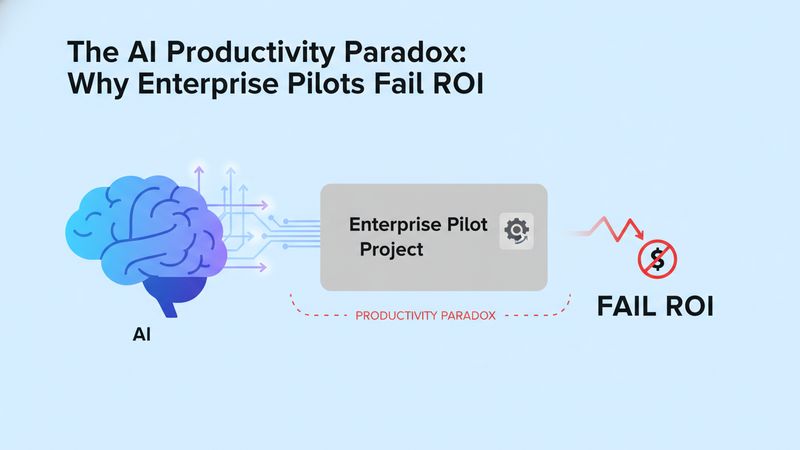
Canadian businesses are pouring millions into digital pilots, yet only 18% see real ROI. Here is how leaders turn experimentation into actual workflow gains.
Across Canadian corporate boardrooms—from Bay Street financial hubs to Ontario's manufacturing heartland—leadership teams face a frustrating operational dilemma. Millions of dollars have been directed toward digital transformation tools, machine learning proof-of-concepts, and generative assistants, yet bottom-line output per worker has barely budged. This friction highlights the growing AI productivity paradox: while executive appetite for modernization is at an all-time high, disconnected digital pilots fail to deliver demonstrable business returns.
According to recent research by BDO Canada, 45% of Canadian mid-market organizations are actively experimenting with AI tools without achieving meaningful ROI, while only 18% have successfully embedded these systems into core workflows. Compounding this challenge, nearly one-third (29%) of business leaders are delaying major capital expenditures due to macro uncertainty and rising operational costs. For Canadian executives, the issue is no longer discovering novel technology—it is redesigning operating models so software investments produce tangible financial value.
Why Modern Technology Fails to Move the Needle
The fundamental breakdown in digital ROI rarely stems from inadequate software algorithms. Instead, the gap widens when technology is layered on top of disjointed operational architectures and antiquated business processes.
1. The Isolated Task Trap
Most organizations roll out technology as task-level augmentations: generating email drafts, speeding up documentation, or summarizing spreadsheets. While individual employees save minutes, the overarching business workflow remains unchanged. A contract still sits in a manager's inbox for four days awaiting approval, or finance personnel must still manually reconcile data between legacy databases. Speeding up an isolated task does not accelerate the enterprise.
2. Brownfield Friction and Data Silos
Enterprise data in mid-sized Canadian enterprises remains locked behind aging on-premise infrastructure or poorly integrated platforms. When automated tools cannot access real-time inventory levels, customer histories, or ERP ledgers, they create hallucinations or stall entirely. Studies on enterprise automation ROI show that failed initiatives frequently ignore downstream data plumbing, causing post-launch maintenance and error remediation costs to erase projected labor savings.
3. Lack of Operational Ownership
Pilots driven exclusively by IT departments without deep business-unit alignment often build tools employees do not trust or use. Conversely, shadow software deployments driven by line-of-business managers bypass security frameworks, leading to governance vulnerabilities and fragmented architectures.
+-------------------------------------------------------------------------+
|               THE SHIFT: FROM EXPERIMENTATION TO ROI                    |
+-------------------------------------------------------------------------+
| EXPERIMENTAL PILOTS (Failure Mode)  | SYSTEMIC WORKFLOWS (Success Mode) |
| ----------------------------------  | --------------------------------- |
| - Isolated departmental tools       | - End-to-end process orchestration|
| - Manual data hand-offs             | - Real-time API-driven core access|
| - Vague 'time-saved' metrics        | - Hard cost & cycle-time tracking |
| - Fragile point-to-point scripts    | - Secure, governed architecture   |
+-------------------------------------------------------------------------+
Real-World Scenario: The Logistics Bottleneck in Southern Ontario
Consider a mid-size distribution company headquartered in Mississauga managing regional warehousing and fleet freight. Facing margin pressures, leadership approved multiple digital licenses for warehouse dispatchers and automated customer service chat tools.
On paper, order confirmation times dropped from hours to seconds. However, overall shipping lead times remained stagnant. Why? The dispatch tool generated dynamic delivery schedules that could not automatically synchronize with their custom legacy AS/400 inventory core. Order exceptions still required manual phone calls between warehouse managers and account reps.
Instead of saving money, the company saw its operating expenses increase due to redundant software seats and dual-entry maintenance. Real ROI was achieved only after leadership mapped the full lifecycle of an order, wrapped the legacy core with standardized API layers, and automated end-to-end exception handling directly into their operations.
Actionable Strategies to Turn Pilot Programs into Enterprise ROI
To bridge the productivity divide in 2026, Canadian technology leaders and operations executives must shift their approach from technology experimentation to structural modernization:
- Anchor Investments to Concrete Business Metrics: Stop measuring success by software adoption rates or hypothetical hours saved. Measure cycle times, inventory turn velocity, Days Sales Outstanding (DSO), and error reduction rates.
- Re-engineer Business Processes First: Before writing code or buying software licenses, eliminate redundant approvals and hand-offs. Automating an inefficient workflow merely produces bad outcomes faster.
- Modernize Core Systems via API-Led Architectures: As industry guides on legacy modernization emphasize, mid-market enterprises do not need risky rip-and-replace overhauls. Exposing core business logic through secure APIs bridges the gap between old data stores and modern workflow platforms.
- Implement Rigorous Maintenance and Governance Models: Account for ongoing compute costs, integration testing, and staff training in your initial business case to avoid unexpected budget overruns.
Partnering for Measurable Digital Outcomes
Navigating legacy architecture while building high-impact digital systems requires engineering precision and practical strategic alignment. Toronto-based technology consultancy Arepitas Technologies Inc helps Canadian mid-market organizations and growing enterprises escape pilot paralysis.
Whether connecting mission-critical legacy databases to modern applications, optimizing complex operations, or building custom enterprise platforms, exploring our comprehensive software and modernization services ensures your technology investments yield predictable, scalable ROI.
Conclusion
The gap separating companies that view digital tools as expensive experiments from those that leverage them for competitive advantage comes down to leadership and architectural strategy. By focusing on whole-workflow redesign, secure data integration, and quantifiable business outcomes, Canadian leaders can finally overcome the productivity paradox and build resilient, profitable operations.
Sources
Need help with tech leadership & strategy?
Arepitas Technologies Inc helps companies in Toronto build software, AI features, and digital products that scale.
Book a Free ConsultationRelated Articles
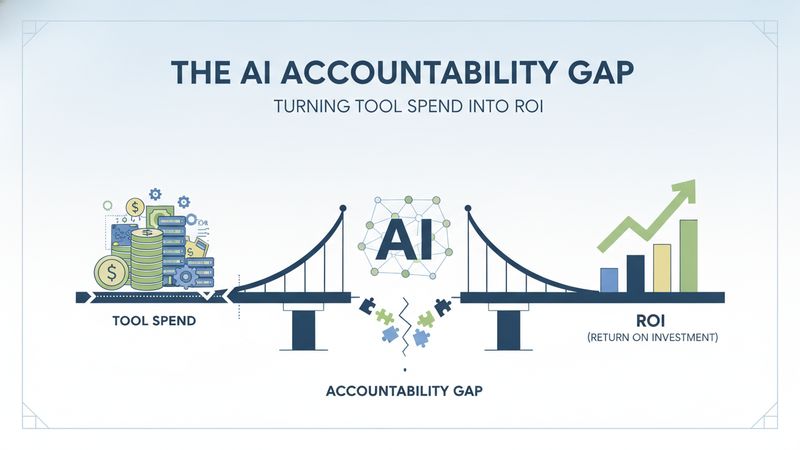
The AI Accountability Gap: Turning Tool Spend Into ROI
Canadian companies are spending 12x more on AI tools, but ad-hoc adoption is stalling ROI. Here is how executives bridge the AI accountability gap in 2026.
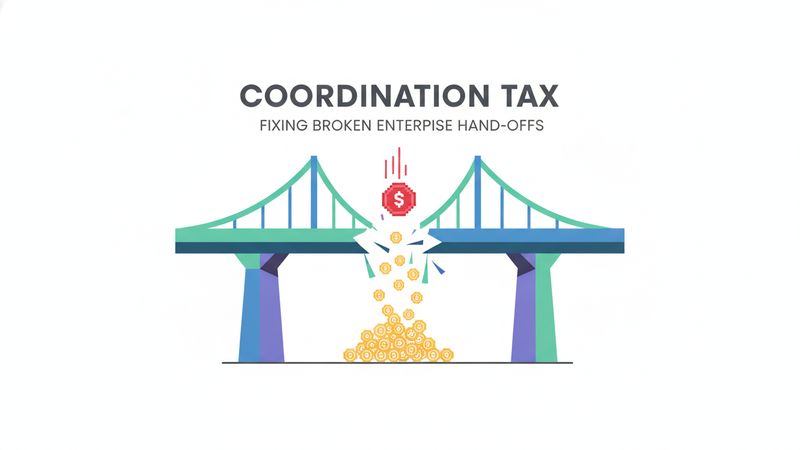
The Coordination Tax: Fixing Broken Enterprise Hand-Offs
Discover why the enterprise coordination tax stalls digital ROI and how Canadian leaders can automate cross-team hand-offs to protect operating margins.
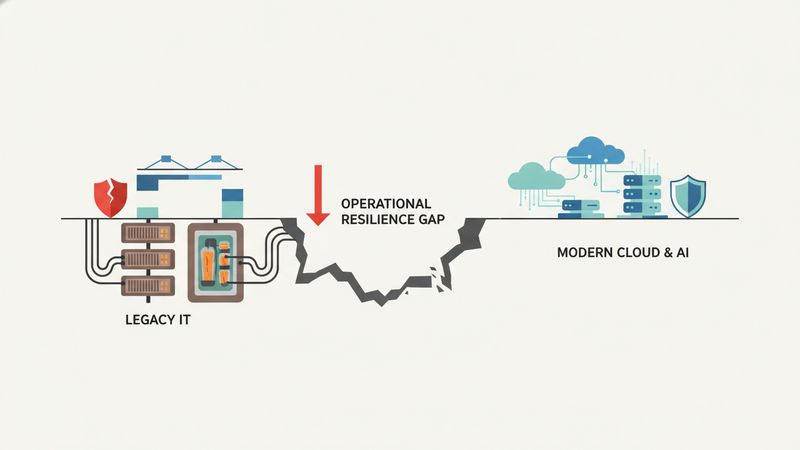
The Operational Resilience Gap: Modernizing Legacy IT
Canadian enterprises face mounting regulatory scrutiny and legacy operational risks. Here is how modern leaders decouple core workflows to stay competitive.