The Coordination Tax: Fixing Broken Enterprise Hand-Offs
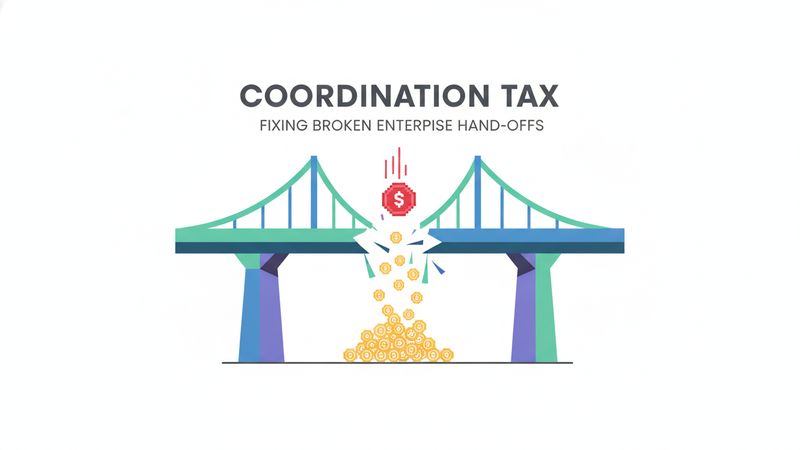
Discover why the enterprise coordination tax stalls digital ROI and how Canadian leaders can automate cross-team hand-offs to protect operating margins.
For executive leadership teams, the modern software landscape presents a confounding paradox. Companies have invested heavily in best-in-class SaaS platforms, cloud infrastructure, and task-level automation tools. Yet, when CFOs and operations directors review quarterly performance metrics, operating margins remain stubbornly flat, and cycle times for core business transactions continue to drag.
The primary culprit draining profitability is the enterprise coordination tax—the silent accumulation of friction, delays, and manual reconciliation that occurs whenever work transitions between teams, departments, and disconnected software systems.
Recent enterprise research reveals the scale of this divide. While 80% of organizations report that modern productivity tools have improved individual worker output, only 37% report a measurable impact on enterprise earnings before interest and taxes (EBIT). When automation is trapped inside departmental silos—such as marketing, procurement, logistics, or accounting—the efficiency gains inside individual tasks vanish during the cross-functional hand-off. For mid-market and enterprise organizations across Canada, eliminating this coordination tax has emerged as the defining operational imperative for sustainable growth.
The Anatomy of the Enterprise Coordination Tax
To understand why digital investments fail to hit the bottom line, business leaders must examine what happens between process stages rather than within them.
Consider a mid-size industrial supply and logistics company based in the Greater Toronto Area (GTA). On paper, the business has modernized its tech stack: the sales team runs on a modern CRM, warehouse operations use a specialized inventory tool, and finance manages billing in a cloud ERP. In isolation, every department appears optimized. However, the end-to-end customer order-to-cash workflow tells a different story:
- Friction at the Handoff: Once a customized contract closes, sales staff manually re-key pricing tiers into a shared spreadsheet for operations review.
- Context Loss and Validation Delays: Operational planners spend hours verifying inventory availability against legacy database tables because real-time stock sync is missing.
- Error Escalation and Rework: If an order parameter changes, finance only discovers the discrepancy during month-end reconciliation, triggering credit memos and customer disputes.
In this typical scenario, highly paid employees spend up to 35% of their working week acting as "human middleware"—chasing email updates, copy-pasting structured data across screens, and diagnosing avoidable errors. This operational drag is what constitutes the coordination tax. While individual workers appear productive, enterprise agility ground down because information flow between systems remained fragmented.
Why Departmental Tools Cannot Solve Cross-Functional Gaps
Historically, enterprises attempted to fix hand-off friction by purchasing more off-the-shelf software or asking individual departments to optimize their own workflows. However, this fragmented approach often accelerates technical debt. Industry surveys indicate that 99% of businesses face significant integration barriers when attempting to modernize operational workflows.
Departmental solutions create three distinct business risks:
- Data Desynchronization: When every team selects its own specialized tool, data becomes fragmented across proprietary clouds, making an accurate, single view of business operations virtually impossible.
- Runaway Customization Costs: Attempting to force rigid enterprise suites (like legacy ERP or CRM deployments) to handle unique operational edge cases results in brittle customizations that cost hundreds of thousands of dollars to maintain.
- Fragile Point-to-Point Integrations: Ad-hoc webhooks and unmanaged scripts created by internal teams break whenever upstream APIs update, causing silent workflow failures that harm customer delivery.
To capture true operating leverage, leaders must pivot from isolated task automation to intelligent workflow orchestration that unifies existing core platforms.
Strategic Steps to Eliminate Workflow Friction and Reclaim Margins
Modernizing cross-team execution does not require multi-year, rip-and-replace software overhauls. Forward-thinking executive teams are adopting modular architectures and event-driven orchestration to systematically eliminate coordination waste.
1. Map High-Impact Value Streams, Not Departmental Tasks
Begin by conducting an end-to-end value stream audit across your top revenue-generating workflows (e.g., client onboarding, supply chain fulfillment, automated invoicing). Quantify cycle times and error rates at each inter-departmental boundary to identify where hand-offs stall.
2. Implement Decoupled Integration and API Gateways
Rather than modifying core legacy systems directly, build an API-first abstraction layer around existing databases and ERPs. This protects critical business records while exposing real-time data hooks that modern workflows can interact with safely.
3. Deploy Event-Driven Orchestration
Replace batch jobs and manual email escalations with automated, event-driven triggers. When a milestone is completed in one system, the downstream platform should automatically ingest the context, validate prerequisites, and trigger subsequent operational actions without manual human intervention.
4. Build Purpose-Built Operational Portals
Empower operations and frontline teams with unified, lightweight internal interfaces. By consolidating data from multiple backend platforms into a single, intuitive dashboard, organizations eliminate swivel-chair data entry and ensure end-to-end auditability.
Modernize Your Core Workflows with a Strategic Development Partner
Eliminating the coordination tax requires a balanced approach that combines business workflow design with robust software engineering. Organizations that succeed do not simply buy more licenses—they architect seamless bridges between their existing platforms, proprietary business logic, and operational teams.
Arepitas Technologies Inc, based in Toronto, partners with mid-market enterprises and growing companies across Canada to eliminate operational bottlenecks, modernize legacy integrations, and engineer high-performance custom platforms. Whether your organization is struggling with disconnected legacy systems, high error rates across inter-departmental hand-offs, or complex data synchronization challenges, our engineering team designs scalable solutions that deliver measurable ROI.
Explore our tailored software engineering and modernization capabilities by visiting our services page to discover how we help leadership teams transform operational complexity into sustainable competitive advantage.
Sources
- •Cutting the 'coordination tax': How agentic AI can reshape workflows - McKinsey
- •Money to be made in legacy systems upgrades thanks to AI and constrained budgets: Ensono - CRN
- •The agentic AI transition is underway - CIO
- •Technical Debt in Digital Business – Hidden Costs, Case Studies & Solutions
- •Legacy System Modernization with AI: The 2026 Enterprise Infrastructure Checklist
Need help with tech leadership & strategy?
Arepitas Technologies Inc helps companies in Toronto build software, AI features, and digital products that scale.
Book a Free ConsultationRelated Articles
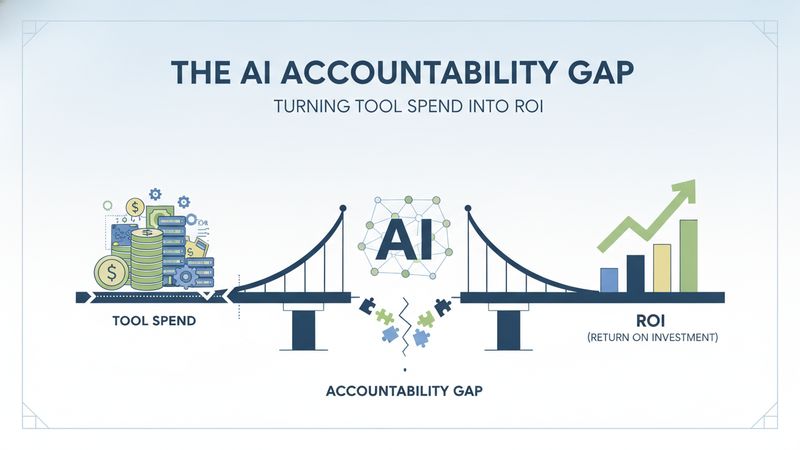
The AI Accountability Gap: Turning Tool Spend Into ROI
Canadian companies are spending 12x more on AI tools, but ad-hoc adoption is stalling ROI. Here is how executives bridge the AI accountability gap in 2026.
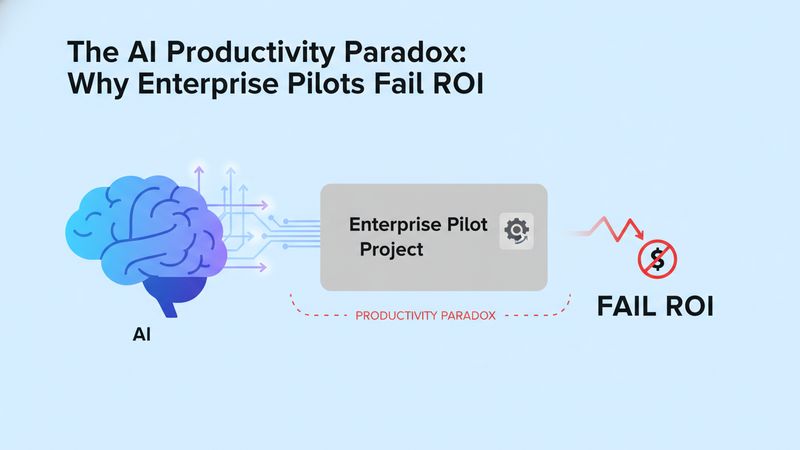
The AI Productivity Paradox: Why Enterprise Pilots Fail ROI
Canadian businesses are pouring millions into digital pilots, yet only 18% see real ROI. Here is how leaders turn experimentation into actual workflow gains.
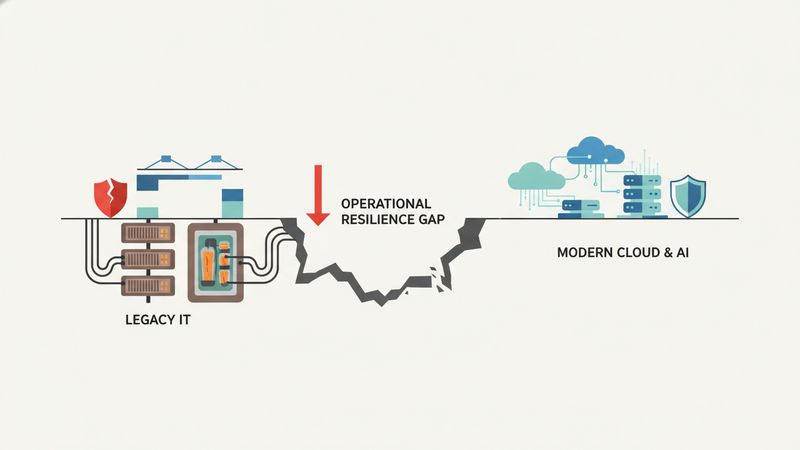
The Operational Resilience Gap: Modernizing Legacy IT
Canadian enterprises face mounting regulatory scrutiny and legacy operational risks. Here is how modern leaders decouple core workflows to stay competitive.