The SaaS Sprawl Crisis: Cutting Hidden Software Costs
Mid-market enterprises are losing up to 30% of software budgets to SaaS sprawl. Here is how leaders can eliminate redundant licenses and streamline tech.
For executive leadership teams, few line items on the operating budget multiply with less oversight than subscription software. SaaS sprawl has quietly grown from a minor administrative annoyance into a major drain on enterprise capital and operational agility. Recent benchmarks indicate that organizations routinely manage between 200 and 300 software-as-a-service applications, with mid-market enterprises wasting 25% to 30% of their annual software spend on duplicate, orphaned, or underutilized licenses.
Every time a business unit manager signs up for a standalone reporting tool, project board, or niche communication utility on a corporate credit card, the company incurs ongoing financial commitments, data governance risks, and hidden integration debt. What starts as a quick fix for team autonomy quickly escalates into departmental silos and operational friction across the business.
The Hidden Balance-Sheet Drain of Unchecked Subscriptions
The financial damage of software proliferation is rarely confined to recurring monthly subscription fees. When tech stacks fragment across departments, business leaders face three compounding liabilities:
- Orphaned and Redundant Licenses: Average enterprise data shows that 9 to 21 new software tools enter corporate environments every month. Because visibility across business units is low, companies routinely pay for overlapping solutions—such as running three different project management tools and two redundant analytics dashboards simultaneously.
- Integration Debt and Workflow Friction: Standalone point solutions create isolated data pockets. Instead of seamless data exchange, operations teams waste hundreds of hours manually importing, exporting, and reconciling information between incompatible systems.
- Security and Compliance Exposure: Shadow subscriptions bypass centralized identity and access management (IAM) frameworks. When team members depart, unmanaged seat licenses remain active, exposing proprietary client records and confidential financial workflows to compliance vulnerabilities.
Real-World Business Scenario: The Toronto Mid-Market Dilemma
Consider a growing logistics and supply-chain firm based in the Greater Toronto Area with 350 employees. Over three years of rapid growth, different departments onboarded their own specialized software tools: sales adopted a dedicated customer engagement platform, the warehouse team licensed custom route-tracking apps, and operations relied on disconnected dispatch tools.
By year four, the executive team discovered the company was paying for 140 separate SaaS subscriptions across six departments, totaling more than $480,000 annually. More critically, inventory figures in the warehouse software differed from the live data in customer service, leading to order delays, lost shipments, and mounting customer churn. Rather than increasing productivity, the explosion of standalone subscriptions had slowed response times and eroded profit margins.
To reverse this drag on growth, leadership initiated an enterprise portfolio rationalization program, decommissioning 45 redundant tools and consolidating their fragmented operations into a unified internal system that synced dispatch, tracking, and billing into a single pane of glass.
A Strategic Roadmap to Eliminate Software Waste
Consolidating your software stack does not mean stripping your team of the tools they need to perform. It requires establishing visibility, standardizing core operational workflows, and consolidating redundant applications into purpose-built platforms.
1. Perform an Exhaustive Software & Usage Audit
Before adjusting licensing tiers, conduct a centralized discovery review across all departments, accounts payable ledgers, and credit card expenses. Identify every active tool, the number of provisioned seats versus actual active users, and the specific business function each application supports.
2. Rationalize and Group Capabilities
Group your applications into functional categories (CRM, collaboration, data reporting, workflow automation). Highlight overlapping feature sets and determine which core platforms can serve cross-functional teams rather than keeping dedicated point applications for isolated groups.
3. Consolidate Disparate Tools into Tailored Software
Buying an off-the-shelf subscription for every micro-problem inevitably leads to licensing creep. Instead of stacking dozens of expensive, recurring third-party apps, progressive enterprises are building centralized, custom internal tools that unify core data flows and scale without per-seat penalty fees.
4. Implement Centralized Procurement and Usage Governance
Establish clear procurement thresholds for new software additions. Institute quarterly license utilization reviews to revoke dormant accounts, terminate unused renewals, and prevent shadow applications from infiltrating the network.
Transforming Sprawl into Competitive Advantage
Reclaiming control over your software portfolio frees up capital that can be redirected toward high-impact business initiatives and digital transformation. Toronto-based leaders who actively eliminate software redundancy see immediate cost reductions, tighter data security, and vastly improved employee productivity.
If your organization is struggling with disjointed workflows, escalating subscription invoices, or legacy application debt, Arepitas Technologies Inc can help. Based in Toronto, Ontario, Arepitas Technologies partners with Canadian mid-market businesses and enterprise leaders to evaluate tech portfolios, sunset redundant software, and build streamlined, scalable platforms that reduce overhead.
Discover how custom software consolidation can modernize your business by exploring our enterprise software development and architecture services.
Sources
Need help with enterprise software?
Arepitas Technologies Inc helps companies in Toronto build software, AI features, and digital products that scale.
Book a Free ConsultationRelated Articles
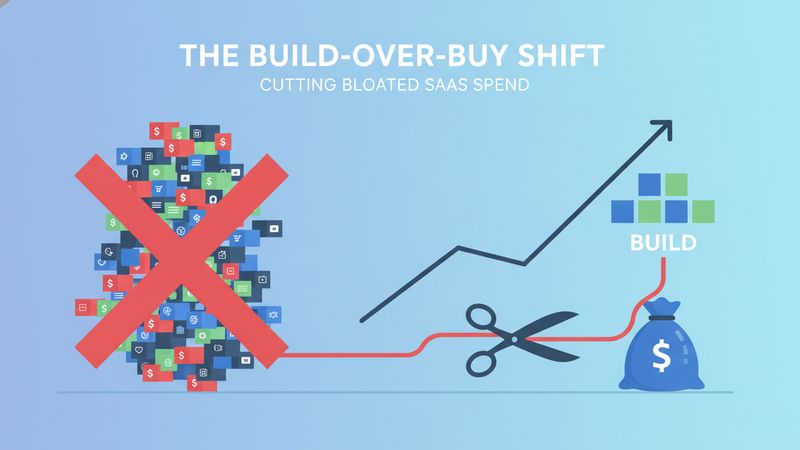
The Build-Over-Buy Shift: Cutting Bloated SaaS Spend
Discover why Canadian mid-market leaders are replacing redundant SaaS subscriptions with targeted custom internal tools to eliminate seat-tax bloat and boost ROI.
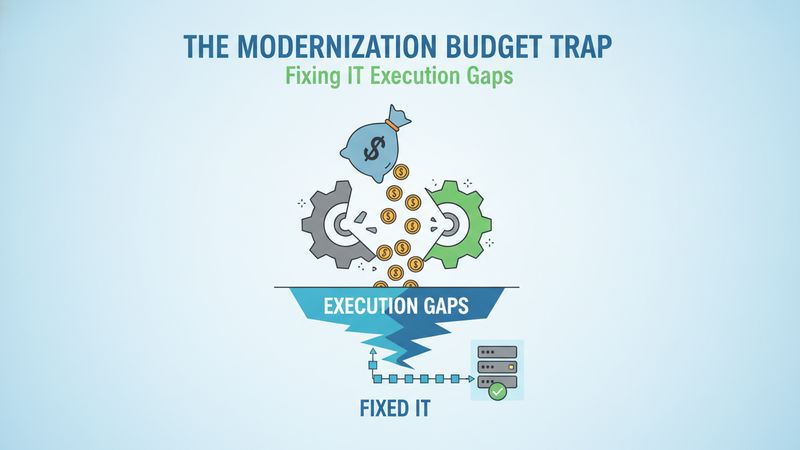
The Modernization Budget Trap: Fixing IT Execution Gaps
Over 70% of enterprise modernizations blow past budgets. Discover why Canadian mid-market leaders are shifting from monolithic overhauls to targeted execution.
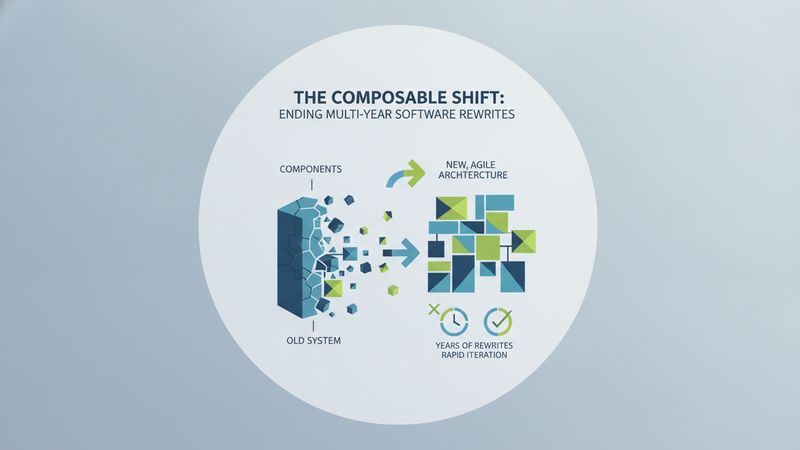
The Composable Shift: Ending Multi-Year Software Rewrites
Discover how composable enterprise software helps Toronto leaders modernize legacy workflows incrementally, cutting cycle times and avoiding costly overhauls.