The Post-MVP Scaling Chasm: Why Early Software Breaks
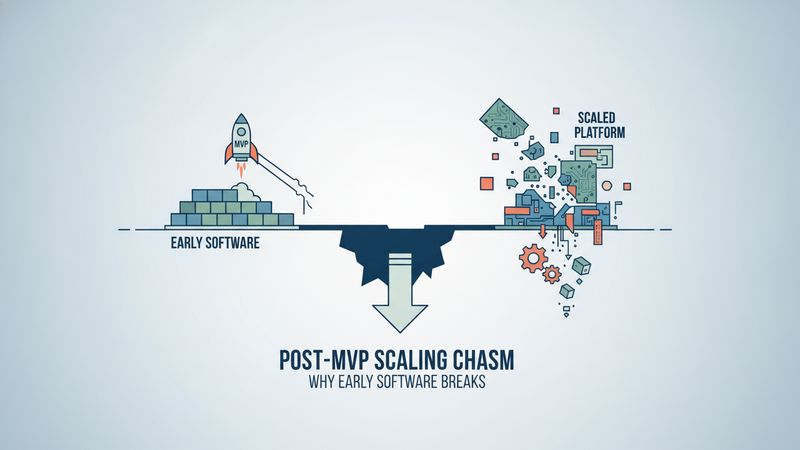
Discover how growing startups can navigate post-MVP scaling without letting early technical shortcuts stall enterprise growth or burn critical venture runway.
For growing tech companies, launching a functional Minimum Viable Product (MVP) and winning early customer traction feels like the ultimate victory. However, many leadership teams quickly run into the harsh reality of post-MVP scaling, where the very shortcuts that enabled rapid market entry begin to stall feature delivery, degrade system reliability, and burn through venture runway. In fast-moving hubs like Toronto and across Canada, where early-stage capital efficiency is paramount, hitting this post-launch architectural wall can jeopardize enterprise deals and stop growth dead in its tracks.
Building an initial prototype requires prioritizing speed over long-term architectural durability. But when early validation succeeds, continuing to stack complex enterprise workflows on top of disposable foundation code transforms tactical technical debt into a crippling business liability.
Why Post-MVP Software Freezes Enterprise Velocity
When a startup transitions from proving demand to onboarding high-value commercial accounts, the operating requirements fundamentally change. The scrappy codebase built to prove a concept is suddenly expected to deliver multi-tenant data isolation, stringent uptime Service Level Agreements (SLAs), and seamless third-party integrations.
According to analysis from BetaKit, Canadian startups face significant hurdles transitioning across the seed-to-scale pipeline, where capital efficiency and rapid execution dictate survival. When engineering teams spend more than half their working hours fighting regressions, patching unstable data pipelines, and managing manual deployments, product velocity collapses just as investor expectations spike.
Consider a mid-sized B2B logistics SaaS company in the Greater Toronto Area. After securing 20 enterprise pilot customers, leadership committed to delivering customized compliance dashboards within a month. However, because the original MVP relied on hardcoded logic, shared database schemas, and unmonitored scripts, a minor database modification broke billing integrations across active accounts. A four-week feature roadmap spiraled into three months of urgent refactoring, burning valuable runway and straining customer relationships.
The Real Business Costs of Premature Scaling
Failing to bridge the architectural chasm between an early prototype and an enterprise-grade platform creates quantifiable business risks across several areas:
- Stalled Feature Delivery: As documented by software engineering authorities like Martin Fowler's architectural insights, unaddressed technical shortcuts cause simple two-day feature requests to stretch into multi-week development cycles because engineers cannot predict how code changes affect adjacent modules.
- Elevated Customer Churn: Enterprise buyers expect dependable reliability and stringent data security. Frequent downtime, slow query response times, and inconsistent permissions erode client trust during critical renewal windows.
- Escalating Cloud Compute Overheads: MVP architectures rarely optimize resource utilization. As active user sessions and transactional volumes grow, unindexed queries and inefficient serverless configurations cause monthly infrastructure bills to surge unpredictably.
- Due Diligence Friction: Venture capital firms and enterprise procurement departments conduct rigorous technical due diligence. Fragile codebases, missing compliance controls, and undocumented tribal knowledge routinely depress valuations or derail acquisition discussions.
Practical Steps to Transition from MVP to Scalable Asset
Crossing the post-MVP chasm does not require halting all commercial development for a multi-year rewrite. Instead, executive teams should adopt a disciplined, modular modernization strategy.
1. Separate Disposable Code from Core Architecture
Audit the existing platform to distinguish between throwaway validation logic and foundational business services. Decouple high-traffic workflows—such as authentication, payment processing, and core data stores—into isolated, well-defined modules so that future iterations do not compromise overall system stability.
2. Implement Automated Delivery and Observability Baselines
Early builds frequently rely on manual server deployments and reactive bug tracking. Investing in automated Continuous Integration and Continuous Deployment (CI/CD) pipelines, comprehensive test coverage for mission-critical paths, and real-time application performance monitoring prevents unexpected regressions from reaching production users.
3. Establish a Dedicated Technical Debt Repayment Ratio
Allocate 20% to 25% of every engineering sprint specifically to paying down structural debt, optimizing database indexes, and refactoring fragile microservices. By treating debt repayment as an ongoing operational standard rather than a sporadic crisis response, organizations sustain consistent product velocity.
4. Align Engineering Milestones with Business Unit Economics
Refactoring must directly serve strategic commercial outcomes, such as decreasing latency on customer onboarding flows, enabling SOC 2 compliance readiness, or reducing server cost per active account. Connecting architectural improvements directly to bottom-line metrics ensures development investments generate tangible returns.
Partnering for Sustainable Scale
Navigating the transition from early market validation to a resilient, scalable digital product requires seasoned technical leadership and disciplined engineering execution. As a Toronto-based technology partner, Arepitas Technologies Inc works alongside founders and corporate innovators to turn fragile prototypes into robust, enterprise-ready software platforms. Whether you need an architectural review, infrastructure optimization, or dedicated development support, explore our comprehensive software development and modernization services to build a solid foundation for sustainable growth.
Sources
Need help with startup & mvp?
Arepitas Technologies Inc helps companies in Toronto build software, AI features, and digital products that scale.
Book a Free ConsultationRelated Articles
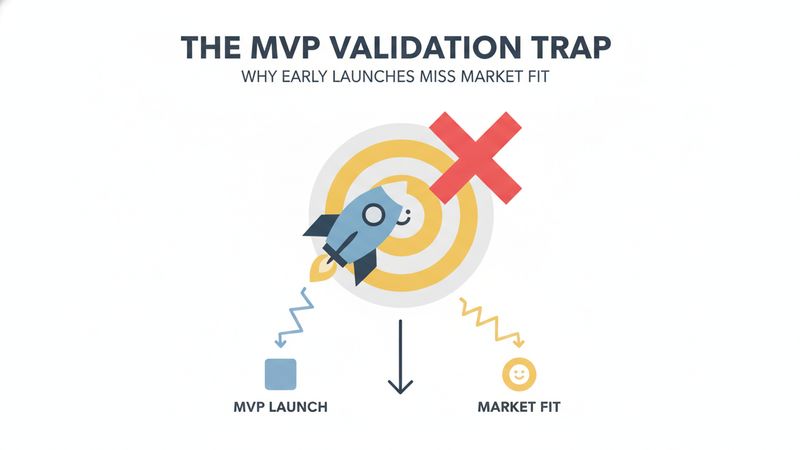
The MVP Validation Trap: Why Early Launches Miss Market Fit
Over 40% of startups fail by mistaking polite feedback for true demand. Discover how structured MVP validation protects runway and drives real market traction.
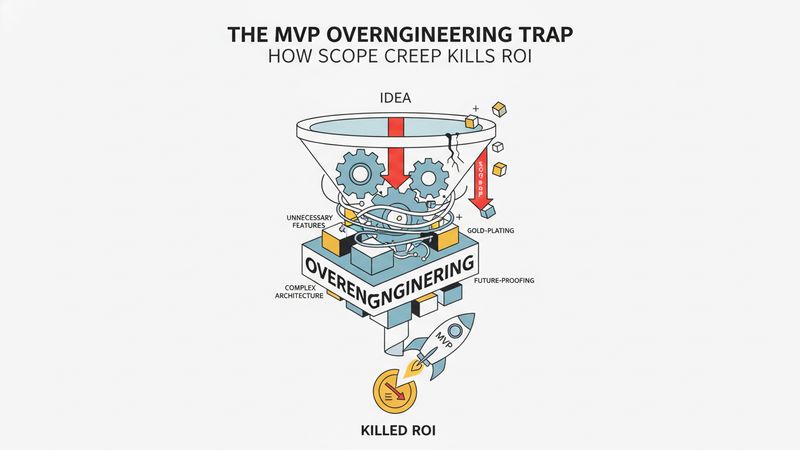
The MVP Overengineering Trap: How Scope Creep Kills ROI
Discover how overengineering and scope creep derail MVP development, drain early capital runway, and how Canadian founders can launch leaner products faster.
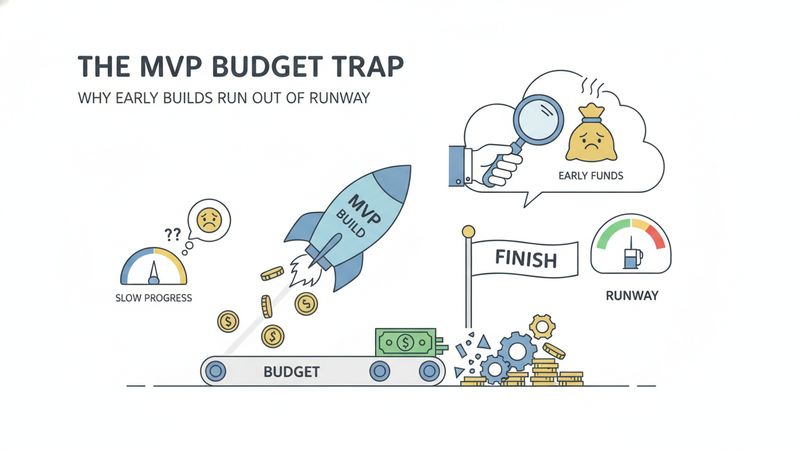
The MVP Budget Trap: Why Early Builds Run Out of Runway
Discover why bloated MVP scopes drain startup budgets before reaching market validation, and how Toronto leaders can build lean products that prove ROI fast.