The Platform Adoption Trap: Reclaiming DevOps Margins
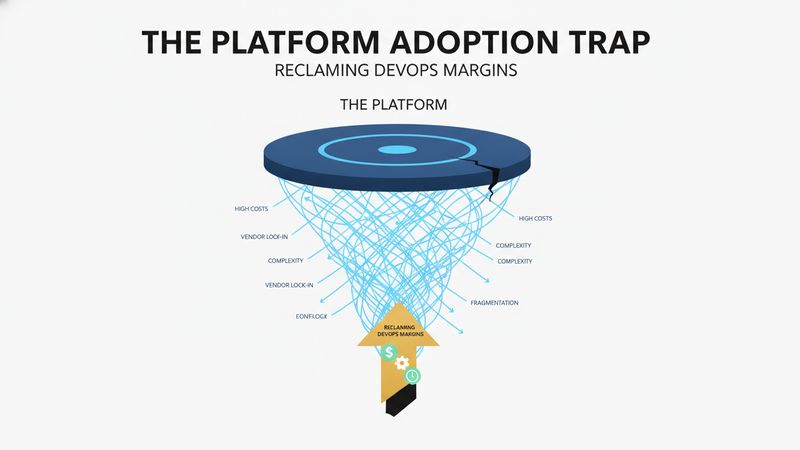
Engineering leaders pour millions into internal developer platforms, yet 68% struggle to prove ROI. Discover how to turn DevOps spend into delivery velocity.
Over the past two years, executive leadership teams across North America poured millions into cloud infrastructure to solve engineering drag. To tame complex cloud architectures and prevent developer burnout, organizations rushed to build internal developer platforms designed to automate deployments and standardize environments. Yet despite heavy capital expenditures, software delivery cycles frequently remain stubbornly sluggish, while platform teams become expensive cost centers that struggle to justify their budgets.
A survey by Gartner reveals that 68% of organizations identify measuring platform ROI as their primary challenge, outstripping technical complexity and talent shortages. Meanwhile, Google Cloud's DORA research on platform engineering demonstrates that while standardized platforms are essential for scaling high-velocity workflows, poor platform implementations actually yield negligible performance improvements. When internal self-service portals fail to gain traction, product developers simply bypass them, sliding back into manual ticketing and rogue cloud configurations that threaten enterprise margins.
The Anatomy of the Platform Adoption Dilemma
Consider a common real-world scenario: A mid-size financial technology company based in downtown Toronto spent nine months and more than $400,000 designing a centralized internal developer platform. The goal was simple: reduce infrastructure provisioning times from three weeks to ten minutes. However, six months after rollout, fewer than a quarter of the company's product developers actively used the portal. Product teams complained that the interface was rigid, poorly documented, and ill-fitted to their daily release rhythms. Instead of self-serving, engineers continued messaging infrastructure leads directly on Slack, creating the exact bottleneck leadership had paid hundreds of thousands of dollars to eliminate.
This pattern reflects the core economic friction of platform engineering: costs aggregate centrally, while benefits disperse invisibly.
- Centralized, highly visible overhead: A dedicated platform team commands premium engineering salaries, costly cloud tooling licenses, and specialized compute clusters. These show up as prominent, recurring line items on the corporate profit-and-loss statement.
- Dispersed, unmeasured value: When a platform works well, developers spend less time untangling deployment scripts and more time writing features. However, conventional corporate accounting does not record "friction that did not happen." Without clear attribution models, leadership sees only the rising bill.
- The 'Field of Dreams' fallacy: Technical teams frequently construct internal portals as infrastructure engineering showcases—layering Kubernetes clusters, service meshes, and complex catalogs—without treating application developers as customers whose day-to-day workflow problems must be discovered and resolved.
Three Bottlenecks That Destroy Platform ROI
When platform initiatives stall, the breakdown rarely stems from deficient cloud tooling. Instead, it reflects strategic misalignments between technical architecture and business objectives.
1. Mandatory Adoption Without Product-Market Fit
When leadership mandates an internal developer platform without first validating developer workflow needs, teams treat the portal as bureaucratic overhead rather than an accelerator. If spinning up a new microservice through the internal portal requires navigating dozens of rigid forms while offering no clear visibility into build failures, developers will inevitably find workarounds. Forcing adoption onto a product that developers dislike triggers passive resistance, driving up delivery latency.
2. The Maintenance Trap and Custom Tool Sprawl
Many enterprise IT teams attempt to assemble complex internal portals entirely from scratch. Within months, internal platform engineers find themselves buried under custom glue code, brittle scripts, and constant maintenance updates across dozens of third-party plugins. Instead of delivering shared services that accelerate business applications, the team spends 80% of its working hours maintaining internal plumbing. As research outlined in Gartner's software engineering trends suggests, failing to establish clean foundations and standardized governance leads directly to high investment with stalled downstream ROI.
3. Downstream Disorder in the Era of AI
With generative AI assistants producing code at unprecedented volumes, delivery pipelines are facing historic strain. As DORA highlights, AI tools amplify existing operational dysfunctions: when teams produce code faster, downstream verification, staging, and deployment stages quickly choke. If an internal developer platform lacks automated guardrails and dependable staging environments, the influx of code simply produces deployment queues, flaky test runs, and emergency rollbacks that consume senior engineering payroll.
Practical Steps to Turn Platform Spend into Enterprise Velocity
To bridge the gap between platform capital expenditures and demonstrable business returns, executive leaders must shift their operational philosophy from building infrastructure projects to operating internal platforms as revenue-enabling products.
- Treat the Platform as an Internal Commercial Product: Assign a dedicated platform product manager whose sole objective is maximizing developer satisfaction, adoption rates, and self-service utilization. Measure internal Customer Satisfaction (CSAT) and platform Net Promoter Score (NPS) just as rigorously as external client feedback.
- Establish 'Golden Paths' Instead of Rigid Guardrails: Build paved, frictionless release paths that make the standardized route the path of least resistance. Developers should opt into the platform because it reduces cognitive overhead, cuts lead times, and removes compliance guesswork, not merely because management issued a policy decree.
- Anchor Success to Executive Delivery Metrics: Stop evaluating platform engineering on infrastructure output metrics such as the number of clusters managed or configuration commits. Instead, track business outcomes: deployment frequency, lead time for changes, mean time to restore service (MTTR), and infrastructure spend per active customer.
- Leverage Strategic Modernization Partners: Engineering leaders do not need to redirect their core application teams to solve infrastructure scaling puzzles alone. Partnering with seasoned software engineering specialists—such as Toronto-based Arepitas Technologies Inc—enables companies to evaluate delivery friction, modernize deployment pipelines, and build practical DevOps architectures. Explore our comprehensive software and platform capabilities through our tailored /services to turn delivery bottlenecks into scalable commercial advantages.
Securing Delivery Margins for the Future
Internal developer platforms are no longer speculative experiments; they are fundamental operating infrastructure for scalable digital enterprises. However, technology leaders cannot afford to let platform initiatives drift into unmeasured, multimillion-dollar infrastructure sinks.
By treating internal platforms as strategic products, measuring concrete business delivery metrics, and prioritizing developer adoption above technological novelty, organizations across Ontario and Canada can protect their engineering margins and translate DevOps investments into sustainable commercial velocity.
Sources
Need help with devops & platform engineering?
Arepitas Technologies Inc helps companies in Toronto build software, AI features, and digital products that scale.
Book a Free ConsultationRelated Articles
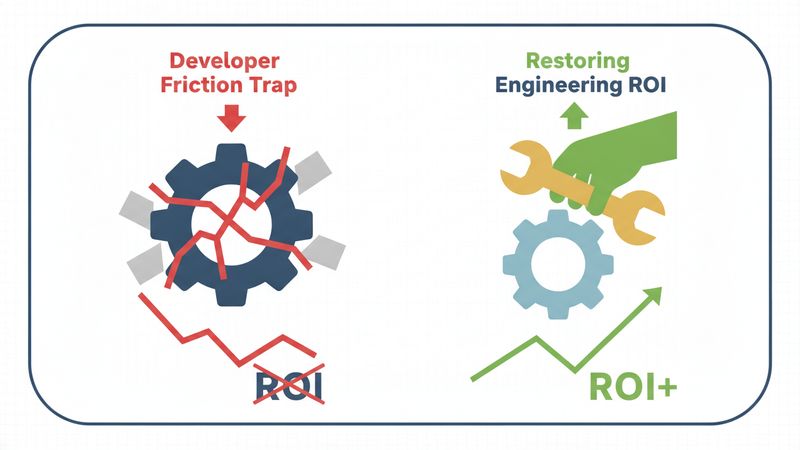
The Developer Friction Trap: Restoring Engineering ROI
Mounting operational cognitive load is stalling software delivery. Discover how internal developer platforms cut friction and restore engineering ROI.
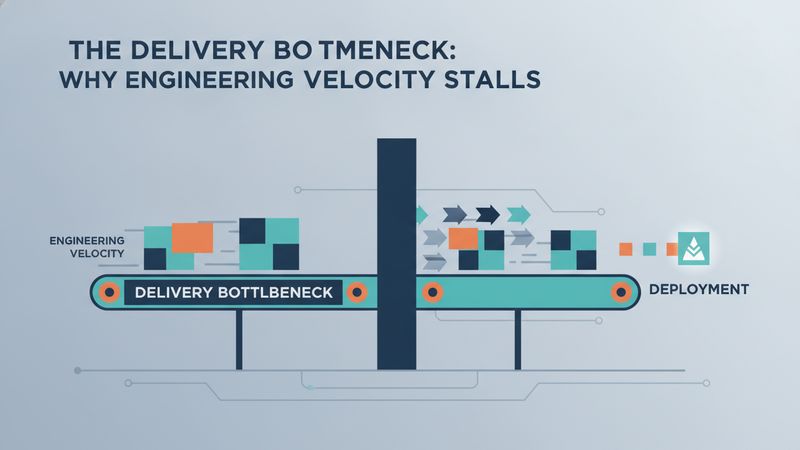
The Delivery Bottleneck: Why Engineering Velocity Stalls
Engineering teams waste up to 40% of their time navigating deployment roadblocks. Here is how internal platforms restore delivery speed and business ROI.
Platform Engineering for Enterprise AI: Scale to Production
Platform engineering for enterprise AI bridges the gap between chaotic pilots and production scale, cutting cloud friction, toil, and spiraling inference costs.