The Frontline App Disconnect: Fixing Field Service Margins
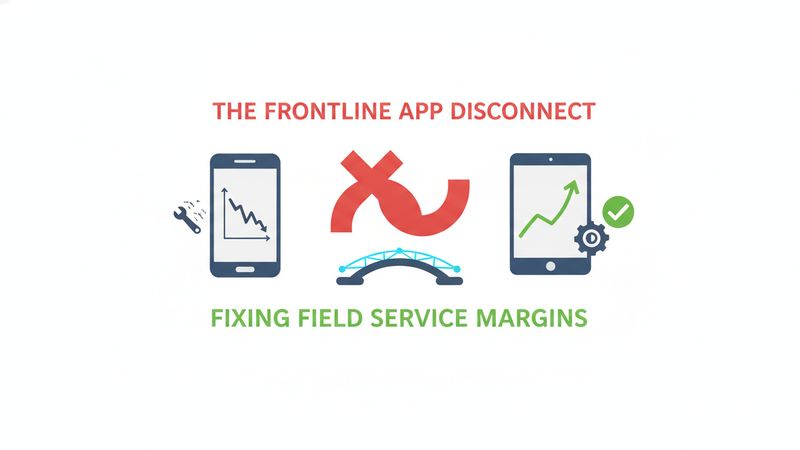
Siloed field operations drain profitability. Learn how mobile workflow modernization connects frontline teams, eliminates delays, and recovers margins.
For mid-market and enterprise businesses operating in heavy equipment, logistics, commercial trades, and facilities maintenance, frontline productivity is the true engine of profitability. Yet in 2026, an alarming operational gap persists between corporate headquarters and the field. While back-office teams leverage modern dashboards, field technicians and service personnel remain bogged down by paper work orders, clunky legacy interfaces, and disconnected mobile tools that do not talk to core databases. Adopting a strategic approach to mobile workflow modernization has become essential for operational leaders seeking to reclaim lost margins, cut scheduling bottlenecks, and boost frontline efficiency.
According to recent enterprise research, field service operations traditionally viewed as cost centers can deliver net-positive financial returns—often yielding upwards of a 195% ROI over three years when workflow automation and mobile integration replace fragmented systems. Conversely, organizations that force technicians to navigate siloed mobile apps lose between 10% and 20% of their operational capacity simply through administrative friction, manual data re-entry, and repeat site visits.
The Hidden Costs of Frontline IT Friction
When frontline teams lack real-time access to operational data, the downstream financial impact ripples across the entire organization:
- Compressed Service Margins: Technicians spend an estimated 45 to 60 minutes each day logging notes, reconciling parts inventory manually, or waiting on dispatch confirmations.
- Depressed First-Time Fix Rates: Without direct mobile visibility into service histories, diagnostic guides, or customer warranty constraints, first-time fix rates plummet, driving up fuel costs, truck rolls, and labor overhead.
- Lagging Cash Flow Cycles: When field data sits on paper tickets or disconnected mobile forms, billing cycles stretch from days into weeks, tying up vital working capital.
- Customer Churn: In competitive markets, commercial clients demand real-time status tracking, self-service dispatching, and rapid resolution times.
Consider a mid-size commercial HVAC and mechanical service contractor in the Greater Toronto Area. Operating a fleet of 45 service vans across Ontario, technicians previously completed paper work orders or entered raw data into disconnected mobile spreadsheets. Dispatchers at the Vaughan head office spent hours re-entering job tickets into the company's legacy ERP system. Billing delays exceeded 18 business days, and invoice dispute rates sat above 12%. By unifying field dispatch, inventory tracking, and work order approvals into an integrated, offline-capable mobile application connected directly to their core database, the firm shortened billing cycles to under 24 hours, increased billable technician hours by 18%, and eliminated administrative rework.
Why Off-the-Shelf Field Apps Often Fail
Many operations directors attempt to solve frontline disconnects by purchasing generic off-the-shelf field management apps. However, these turnkey solutions frequently fall short due to predictable architectural and operational traps:
1. The Rigid Integration Barrier
Generic Software-as-a-Service (SaaS) field products expect clean, standardized APIs. However, most growing Canadian enterprises rely on custom ERP configurations, legacy relational databases, or specialized accounting modules. When mobile apps cannot communicate bidirectionally with core systems, employees are forced into duplicate data entry.
2. Lack of Offline-First Architecture
Frontline workers frequently operate in basements, industrial facilities, rural job sites, or areas with spotty cellular coverage. Standard web applications or poorly architected hybrid apps fail immediately when connectivity drops, resulting in lost entries, frustrated technicians, and data corruption.
3. Cluttered, Desktop-Centric Interfaces
Field technicians need streamlined, task-oriented interfaces that work in low-light environments or while wearing protective gear. Applications packed with complex dropdown menus and multi-screen forms result in poor user adoption and inaccurate data capture.
A Blueprint for High-ROI Mobile Workflow Modernization
To build mobile platforms that frontline staff actually embrace and that deliver measurable financial returns, business leaders should follow a structured modernization roadmap:
- Audit the Point-of-Service Workflow: Map the exact steps a technician, driver, or field engineer takes from receiving a dispatch to closing an invoice. Identify every handoff where manual data entry or communication delays occur.
- Decouple Front-End Apps from Legacy Backends: Instead of attempting a risky, multi-year legacy core replacement, build a lightweight API orchestration layer. This allows tailored mobile web and native applications to interact securely with legacy ERP and CRM databases in real time.
- Engineer for Offline Resilience: Ensure the mobile architecture natively caches job critical data locally on the device, queueing background syncs seamlessly once network connectivity is restored.
- Incorporate Guided Field Automation: Equip frontline interfaces with guided diagnostics, barcode scanning, digital signature capture, and automated time tracking to eliminate paperwork and boost data integrity at the source.
- Track Operational KPIs, Not Just Uptime: Measure transformation success using hard operational metrics—such as technician utilization rates, mean time to bill, first-visit resolution rates, and customer satisfaction scores.
Modernize Your Field Operations with Arepitas Technologies
Closing the gap between mobile teams and back-office systems does not require a risky, multi-million-dollar software overhaul. The most successful organizations modernize incrementally, deploying tailored mobile interfaces and robust API layers that unlock existing enterprise data.
Based in Toronto, Arepitas Technologies Inc partners with Canadian enterprises and growing mid-market leaders to build mission-critical web and mobile applications, integrate legacy architectures, and streamline operational workflows. Whether your goal is to automate field dispatch, eliminate administrative bottlenecks, or connect legacy ERPs to modern digital interfaces, explore our software engineering and modernization services to build custom solutions that drive measurable ROI.
Sources
Need help with mobile & web development?
Arepitas Technologies Inc helps companies in Toronto build software, AI features, and digital products that scale.
Book a Free ConsultationRelated Articles
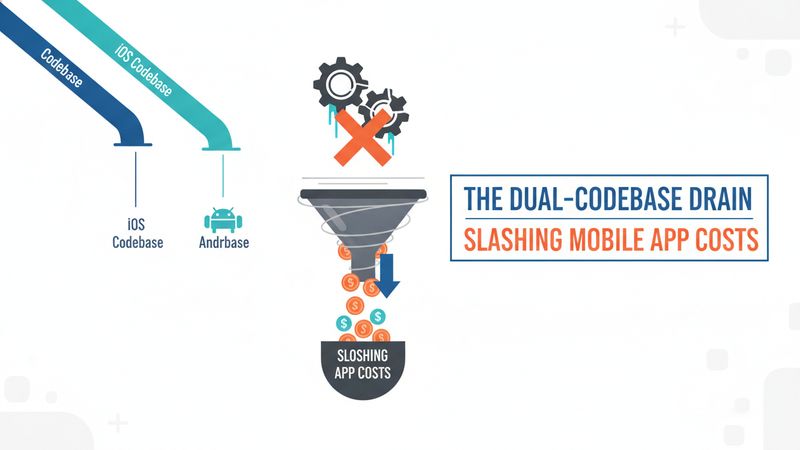
The Dual-Codebase Drain: Slashing Mobile App Costs
Maintaining separate iOS and Android apps doubles mobile app development cost without doubling value. Here is how leaders cut mobile TCO with unified stacks.
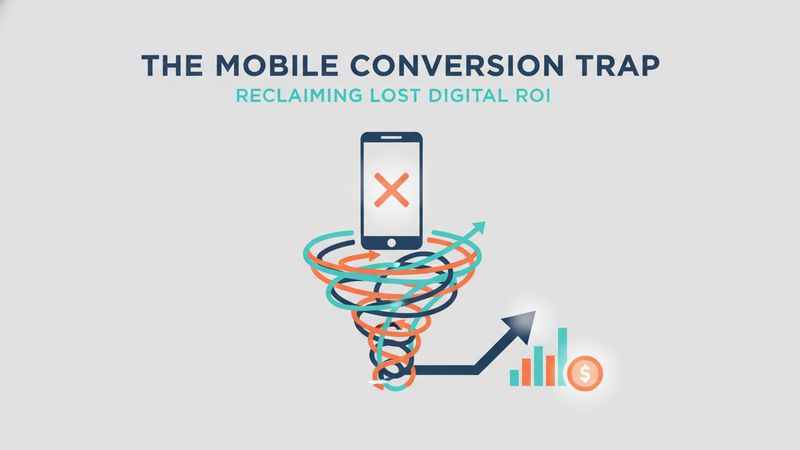
The Mobile Conversion Trap: Reclaiming Lost Digital ROI
Explore why fragmented web and mobile app strategies drain budgets and how Toronto enterprises can eliminate checkout friction to recapture digital revenue.
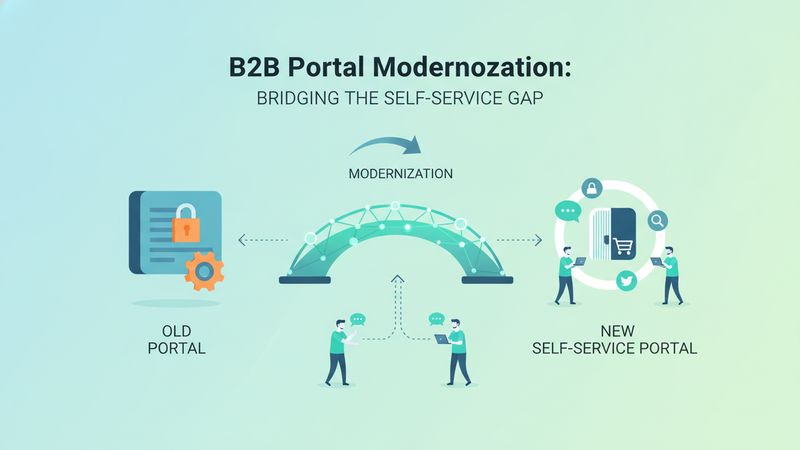
B2B Portal Modernization: Bridging the Self-Service Gap
Outdated customer portals cost Canadian enterprises millions in manual support. Learn why B2B portal modernization drives retention and operational efficiency.