The Dark Data Trap: Turning Wasted Storage Into ROI
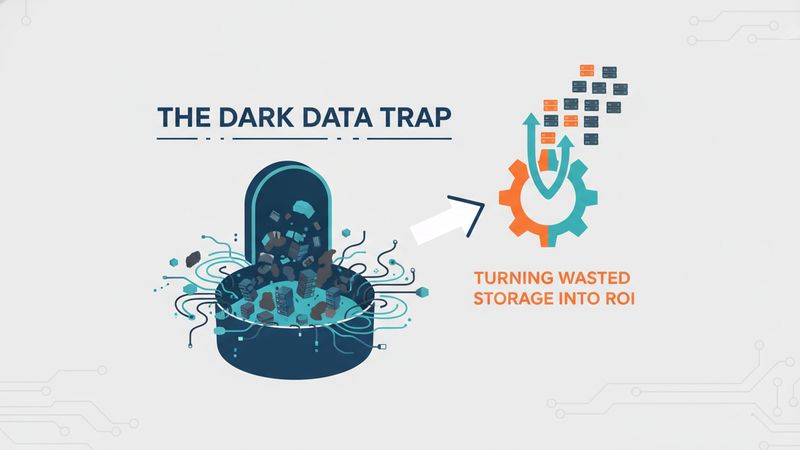
Most enterprise data sits unused in cold storage. Discover how Canadian leaders can eliminate dark data waste and turn buried operational insights into profit.
For mid-market and enterprise leadership teams across Ontario and Canada, the promise of modern business intelligence often collides with an expensive reality. Organizations invest hundreds of thousands of dollars into cloud data warehouses, real-time dashboards, and business intelligence licenses, yet executive decision-making remains frustratingly slow. The core problem is not a shortage of compute power—it is the unchecked accumulation of dark data. When the vast majority of company data sits unclassified, unintegrated, and unmonitored in disconnected storage repositories, leaders end up paying double: first in mounting infrastructure fees and second in missed operational opportunities.
Turning enterprise data analytics into measurable business value requires addressing this visibility gap before sinking more capital into another round of SaaS dashboards.
The Real Cost of Dark Data in Enterprise Operations
Dark data refers to the massive volumes of information—customer interaction logs, unstructured PDF contracts, service tickets, sensor feeds, and siloed transactional records—that companies collect and store during daily operations but fail to leverage for analysis.
According to research from Gartner, poor data quality and unmanaged data architectures cost organizations an average of nearly $13 million annually in lost productivity, redundant storage, and flawed strategic decisions. In many growing mid-sized organizations, up to 80% of stored data is completely inactive or uncataloged.
Consider the direct business consequences:
- Runaway Cloud & Storage Overhead: Companies continuously expand cloud storage tiers to retain historical logs, backups, and raw exports that no business analyst can search or query.
- Analysis Paralysis & Misleading Dashboards: When decision-makers rely on metrics pulled from only a tiny slice of structured data, executive dashboards present an incomplete picture of customer health and operational efficiency.
- Compliance and Security Exposure: Unstructured and unmonitored data repositories often contain sensitive customer or financial information, increasing liability under Canadian regulatory and data privacy frameworks.
A Real-World Scenario: The Logistics Disconnect in the GTA
Consider a mid-size logistics and distribution enterprise in the Greater Toronto Area operating multiple regional warehouses across Southern Ontario. Over three years, the company implemented a popular cloud BI platform to monitor fleet turnaround times, supply chain inventory, and driver allocation.
On the executive dashboard, performance metrics consistently showed green. Yet quarterly customer churn rose by 14%, and on-time fulfillment rates dropped. The operational breakdown was not in the dispatch numbers; it was buried in dark data. Customer support tickets, warehouse driver notes, and carrier bill-of-lading exception emails were stored across disparate mailboxes and legacy ticketing archives. Because these unstructured sources were never ingested or parsed into their centralized data pipeline, leadership missed recurring patterns of delayed dock turnarounds and supplier delivery disputes for months.
Once the company deployed an automated data ingestion and semantic extraction pipeline, leadership could correlate support sentiment and exception tickets directly with dispatch records in real time. Fleet operational efficiency rebounded within ninety days, cutting carrier penalty costs by over $180,000 annually.
How Business Leaders Can Eliminate the Dark Data Drain
Unlocking tangible ROI from your data stack does not require replacing your entire software ecosystem. It requires shifting from passive data storage to active data curation and decision enablement.
1. Conduct a Data Asset & Pipeline Audit
Before buying new analytics tools, identify where critical business knowledge lives. Map data flows across your legacy ERP, customer portals, billing systems, and unstructured file repositories. Categorize what is actionable, what is cold archival data, and what can be safely purged.
2. Connect Analytics to Decision Workflows
Avoid building dashboards around available data; build pipelines around key business decisions. If an operational metric changes, what specific action does a manager take? Aligning data models with concrete commercial and operational decisions prevents dashboard clutter and boosts team adoption.
3. Integrate Unstructured Data with Intelligent Automation
Leverage automated data pipelines to extract structured value from unstructured operational documents—such as supplier invoices, contracts, customer service chats, and maintenance logs. Converting dark operational assets into structured telemetry gives analytics tools the complete context needed for reliable forecasting.
4. Consolidate and Enforce Semantic Models
Discrepancies in how departments define key business metrics—such as customer acquisition cost, gross margin, or operational lead time—create conflicting reports and executive distrust. Establish unified data definitions and semantic layers across the organization so every department works from a single version of truth.
Building a Sustainable Analytics Strategy
Data and analytics initiatives deliver value only when they streamline operations, protect margins, and accelerate revenue. If your company is struggling with mounting cloud storage bills, fragmented data sources, or reports that fail to explain underlying operational challenges, partnering with experienced technical architects can fast-track your path to ROI.
At Arepitas Technologies Inc, based in Toronto, we help mid-market and growing enterprises modernize their data architectures, build custom automated pipelines, and transform dormant data assets into high-impact operational tools. Explore our custom software and modern data solutions on our /services page to discover how we help leadership teams make confident, data-driven decisions.
Sources
Need help with data & analytics?
Arepitas Technologies Inc helps companies in Toronto build software, AI features, and digital products that scale.
Book a Free ConsultationRelated Articles
The Data Downtime Tax: How Broken Pipelines Drain Margins
Unchecked data downtime costs enterprises over $49,000 an hour in flawed decisions. Here is how leaders restore data integrity to protect operational margins.
The Data Integration Trap: How App Sprawl Stalls Growth
With over 70% of enterprise tools disconnected, data integration gaps are stalling growth. Here is how leaders are unifying systems to protect margins.
Enterprise AI ROI: Bridging Data Debt and Legacy Silos
Enterprise AI ROI remains stalled for many organizations due to legacy data debt and unstructured silos. Here is how modern IT leaders bridge the gap in 2026.