Enterprise AI ROI: Bridging Data Debt and Legacy Silos
Enterprise AI ROI remains stalled for many organizations due to legacy data debt and unstructured silos. Here is how modern IT leaders bridge the gap in 2026.
Achieving measurable enterprise AI ROI has emerged as the defining leadership challenge of 2026. While over 80% of organizations have deployed generative AI pilots or operational copilots across various business units, the conversion rate from experimental hype into bottom-line profitability remains unexpectedly low. Recent industry findings highlighted by RSM US indicate that while 90% of technology companies report integrating AI into their workflows, 68% cite data quality and 57% cite legacy integration as the principal reasons their deployments fail to scale. When intelligent models are layered over fragmented architectures and undocumented legacy pipelines, organizations merely automate inefficiency rather than accelerating business value.
To bridge the gap between pilot purgatory and quantifiable EBIT impact, engineering leaders and CIOs are abandoning generic LLM wrapper experiments. Instead, the strategic focus is moving rapidly toward fundamental data foundation overhauls, semantic layer unification, and domain-driven data governance.
The Anatomy of the Enterprise AI ROI Plateau
The root cause of stalled AI returns rarely stems from the artificial intelligence model itself. Whether leveraging proprietary foundation models or open-weight models, today’s algorithms possess immense cognitive and generative capacity. The breakdown occurs at the data ingestion and context layer.
1. The Unstructured Data Blindspot
Traditional enterprise data warehouses and relational business intelligence platforms were designed to process structured records—transaction tables, ERP logs, and CRM fields. However, the majority of actionable corporate intelligence resides in unstructured forms: email threads, technical documentation, scanned contracts, Slack communications, and PDF reports. According to recent analysis published in Forbes, an overwhelming 94% of organizations report severe friction in locating, securing, and feeding unstructured data into downstream AI systems. When foundational models cannot parse institutional context, hallucinations increase and business confidence drops.
2. Opaque Inference Costs and Budget Sprawl
Enterprises that budgeted AI adoption strictly around software licensing are facing severe friction as workloads move into production. Reporting from CIO reveals that as autonomous multi-step agents and iterative retrieval-augmented generation (RAG) pipelines scale, inference call volumes multiply exponentially. Without strict unit-cost telemetry and semantic caching, high token consumption quickly erodes operating margins before workflows achieve meaningful productivity payback.
3. Logic Black Boxes in Legacy Infrastructure
Decades of technical debt have left mission-critical workflows trapped within undocumented batch scripts and legacy on-premises databases. When modern AI tools are introduced, they cannot interact with these static environments without costly custom middleware. Attempting to deploy real-time decision systems on 24-hour batch refresh schedules creates operational friction that undermines agility.
Strategic Blueprints for Data Modernization
Leading technology organizations are moving away from brute-force compute investments and reallocating capital toward structural data readiness. Modernizing these environments requires a phased, architectural approach that balances governance with accessibility.
- Implement a Unified Semantic Layer: As noted by Bain & Company, foundation models are rapidly commoditizing; the enduring differentiator for any business is its proprietary semantic context. Developing a standardized metadata and semantic layer ensures that AI models query domain data with uniform business logic across all enterprise apps.
- Transition from Monolithic Warehouses to Modern Lakehouse Architectures: Unifying vector search capabilities, real-time event streaming, and tabular storage within a consolidated lakehouse eliminates brittle point-to-point ETL pipelines.
- Enforce Continuous Runtime Governance: Modern AI governance must evolve beyond static policy documentation. Automated data lineage tracking, role-based retrieval filtering, and prompt sanitization protect proprietary IP while ensuring regulatory compliance across hybrid environments.
- Restructure IT and Domain Delivery Models: Organizations extracting high returns from automation pair cross-functional platform engineers directly with business unit operators. Explore our specialized modernization and data engineering services to evaluate how your architecture can transition from legacy debt into an AI-ready data ecosystem.
Real-World Implementation: Moving from Pilot to Production
Transitioning from experimental AI tools to durable operational platforms requires deliberate sequencing. Technology leaders must evaluate initiatives across three operational vectors:
Stage 1: Data Audit and Pipeline Modernization
Before launching new automated agents, conduct a rigorous audit of pipeline latency, schema consistency, and unstructured access controls. Cleaning and indexing core operational assets provides immediate downstream improvements to RAG accuracy and drastically cuts compute waste.
Stage 2: Context-Aware Retrieval and Vector Indexing
Implement zero-copy data virtualization and vector-native indexing to allow AI workloads to query enterprise databases securely without creating duplicate, vulnerable data silos. This ensures data freshness while drastically reducing storage footprints.
Stage 3: Granular Outcome and Financial Tracking
Replace vague adoption metrics—such as token counts or active logins—with granular business indicators, including cycle-time reduction, manual triage deflection, and operational cost savings. Tying model usage directly to unit economics enables leadership to fund high-performing applications while decommissioning underperforming projects.
Conclusion: The Path Forward
The narrative around enterprise AI has permanently shifted from speculative excitement to cold operational calculus. Realizing tangible enterprise AI ROI requires looking past the surface level of generative models and addressing the structural data debt beneath. Organizations that modernize their data architectures, unify unstructured intelligence, and institute robust semantic governance will turn artificial intelligence from an unpredictable expense into a compounding competitive advantage.
Sources
Need help with data & analytics?
Arepitas Technologies Inc helps companies in Toronto build software, AI features, and digital products that scale.
Book a Free ConsultationRelated Articles
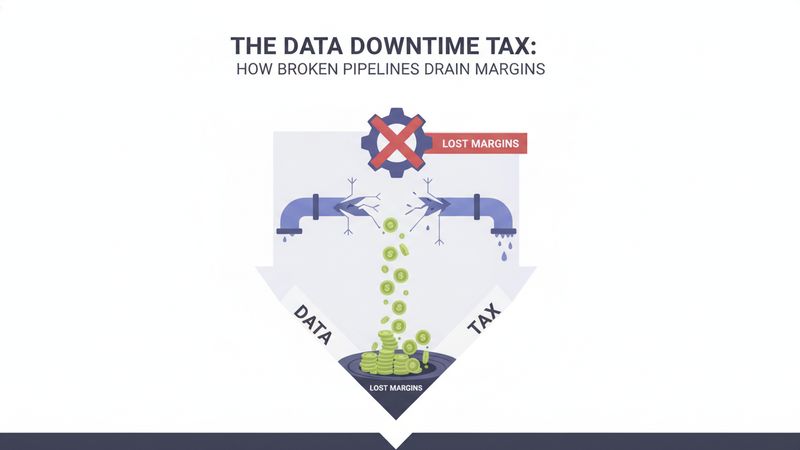
The Data Downtime Tax: How Broken Pipelines Drain Margins
Unchecked data downtime costs enterprises over $49,000 an hour in flawed decisions. Here is how leaders restore data integrity to protect operational margins.
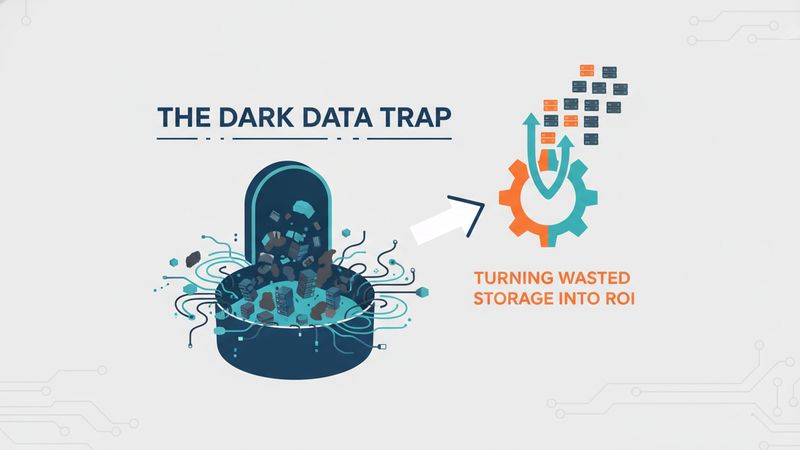
The Dark Data Trap: Turning Wasted Storage Into ROI
Most enterprise data sits unused in cold storage. Discover how Canadian leaders can eliminate dark data waste and turn buried operational insights into profit.
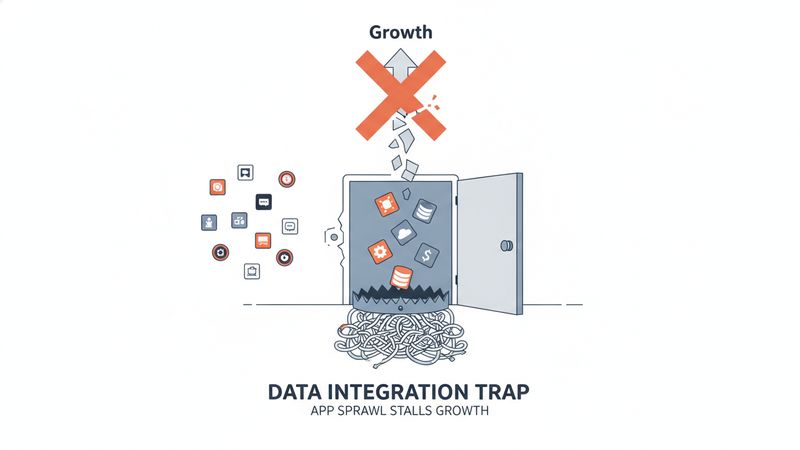
The Data Integration Trap: How App Sprawl Stalls Growth
With over 70% of enterprise tools disconnected, data integration gaps are stalling growth. Here is how leaders are unifying systems to protect margins.