The AI Integration Dilemma: Turning Automation Into ROI
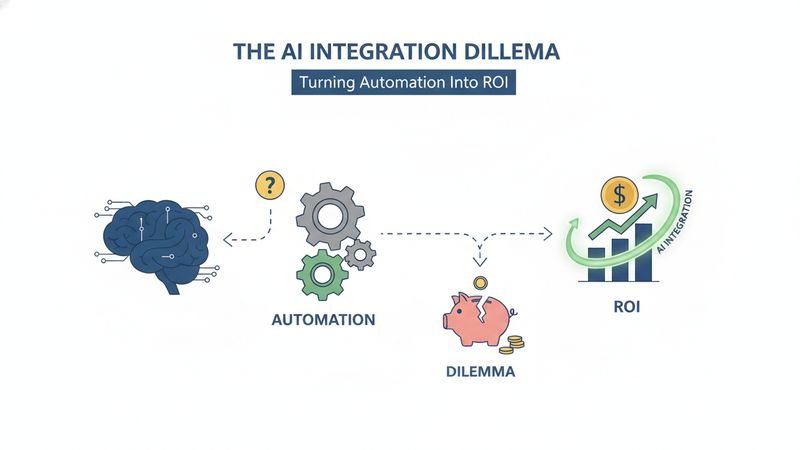
Canadian mid-market leaders are moving past experimental AI chatbots. Discover how connected agentic workflows eliminate hidden costs and drive measurable ROI.
Canadian business leaders face an escalating paradox: artificial intelligence tools are everywhere in the enterprise, yet bottom-line operational efficiency remains stubbornly difficult to measure. According to Statistics Canada's latest quarterly survey on business conditions, 25.2% of Canadian companies plan to deploy AI in their operations over the next 12 months—a figure that has more than doubled across the past two years. Furthermore, data from CDW Canada's Modern Workspace Report reveals that while 58% of organizations have officially sanctioned AI tools for workplace use, nearly half (46%) either lack formal KPIs to track return on investment or do not know whether their initiatives generate measurable gains.
For executives across Ontario and Canada, the era of unguided experimentation has ended. Individual productivity hacks—like summarizing emails or drafting marketing blurbs—rarely move core operational needle metrics. The real competitive advantage lies in agentic workflow automation: orchestrating intelligent systems that handle complex, multi-step business transactions directly within core operational platforms.
The Real Cost of Fragmented AI Deployments
When automation initiatives stall, it is seldom because the underlying machine learning models failed. Instead, failure stems from architectural disconnects. Most mid-sized organizations adopted artificial intelligence piecemeal: customer service launched standalone chatbots, finance acquired invoice scanning plug-ins, and operations experimented with disconnected scheduling tools.
This fragmented adoption model introduces severe operational friction:
- The 'Context Switching' Tax: Employees spend substantial manual effort taking unstructured outputs from an AI interface and copy-pasting them into legacy ERPs, CRM platforms, and accounting software.
- Compounding Exception Costs: Autonomous workflows without deterministic fallback logic break down whenever inputs vary slightly, requiring high-cost human intervention to troubleshoot edge cases.
- Uncontrolled Infrastructure and License Waste: Layering redundant third-party SaaS seats and unoptimized API calls creates unforeseen operating expenses that quickly erode projected labor savings.
As research from Gartner highlights, organizations are moving from simple rule-based triggers toward multi-agent automation architectures. However, Gartner projects that by 2028, up to 70% of custom-built agentic projects will face cancellation if companies fail to establish clear governance, process intelligence, and direct systems integration early on.
Real-World Scenario: The Operations Bottleneck in Mid-Market Distribution
Consider a mid-sized supply chain distributor based in the Greater Toronto Area. The company handled thousands of custom procurement orders weekly. To speed up order processing, management equipped dispatchers with off-the-shelf generative AI assistants to parse incoming vendor PDFs and unstructured shipment emails.
While individual dispatchers saved minutes drafting status responses, company-wide cycle times barely shifted. Why? The assistant could not cross-reference live warehouse inventory, automatically validate fluctuating freight surcharges against carrier contracts, or write finalized order records into their legacy accounting core. Operations managers still spent hours manually re-keying data and resolving invoicing mismatches between systems.
Real turnaround happened only when the company transitioned to an integrated automation layer. By designing custom middleware that linked their ingestion models directly to their core database, validation rules, and inventory APIs, order processing times dropped by 65%, slashing order-to-invoice latency from three days to under four hours.
Three Pillars for High-ROI Enterprise Automation
To move beyond speculative AI spend and generate tangible balance sheet improvements, operational directors and CTOs must ground their automation roadmap on three strategic pillars:
1. Shift from Task Assistance to End-to-End Orchestration
Single-step AI tools only optimize discrete tasks; they do not optimize business outcomes. High-performing organizations map end-to-end workflows—from customer inquiry intake to system reconciliation—and use deterministic business logic paired with contextual AI agents to complete entire operational chains automatically.
2. Connect Legacy Systems of Record
AI models are only as effective as the enterprise data they touch. Rather than replacing dependable back-office systems with costly new enterprise software, forward-thinking organizations build modern API gateways and integration layers that allow intelligent agents to safely query and update existing legacy databases with full audit logs.
3. Implement Strict Guardrails and Operational KPIs
Establish quantifiable metrics before deployment. Measure cost per processed transaction, exception recovery time, and gross margin improvements rather than vanity adoption figures. Ensure that automated workflows include clear role-based access control and human-in-the-loop review checkpoints for high-risk transactions.
Unlocking Scalable Automation with Arepitas Technologies
Bridging the gap between legacy enterprise infrastructure and scalable automation requires specialized engineering that understands business outcomes, data security, and long-term maintainability.
Based in Toronto, Arepitas Technologies Inc helps mid-market enterprises, growing companies, and regional institutions transform complex back-office workflows into high-efficiency automated systems. Whether your business needs custom integration pipelines, secure data architectures, or modern software development, explore our expert engineering solutions across our /services portfolio to unlock durable operational ROI.
Sources
Need help with ai & automation?
Arepitas Technologies Inc helps companies in Toronto build software, AI features, and digital products that scale.
Book a Free ConsultationRelated Articles
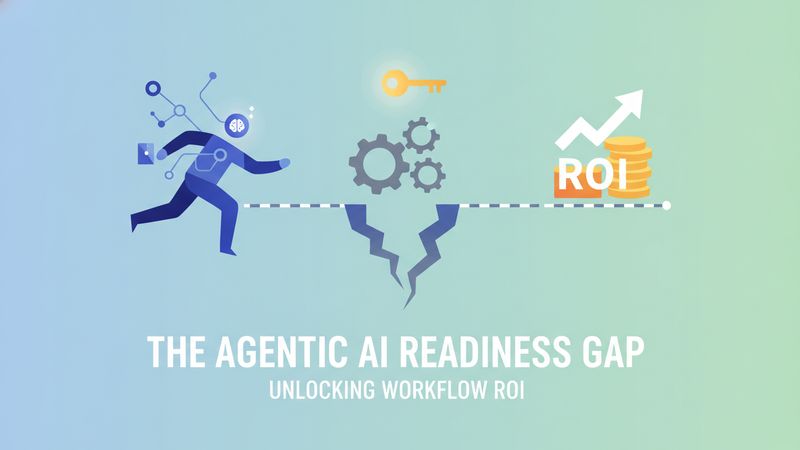
The Agentic AI Readiness Gap: Unlocking Workflow ROI
While Canadian firms rush toward autonomous workflows, a 97% agentic AI readiness gap risks millions in value. Here is how leaders close it for real ROI.
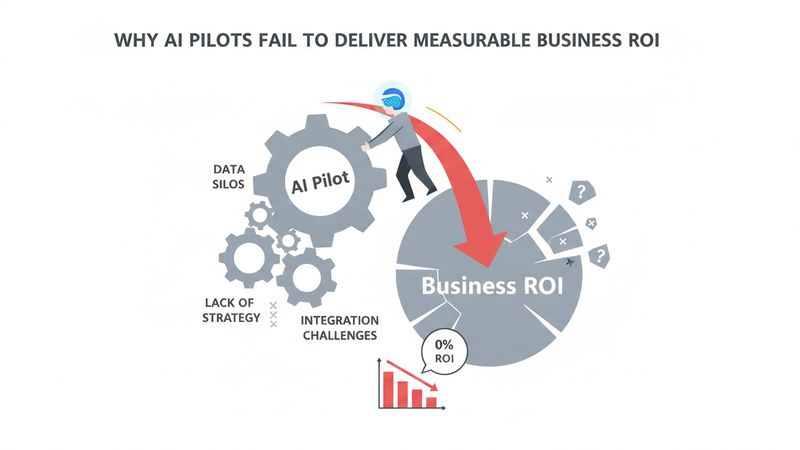
Why AI Pilots Fail to Deliver Measurable Business ROI
Nearly half of Canadian businesses are trapped in AI pilots with no ROI. Here is how operational redesign turns disconnected tech into measurable profit.
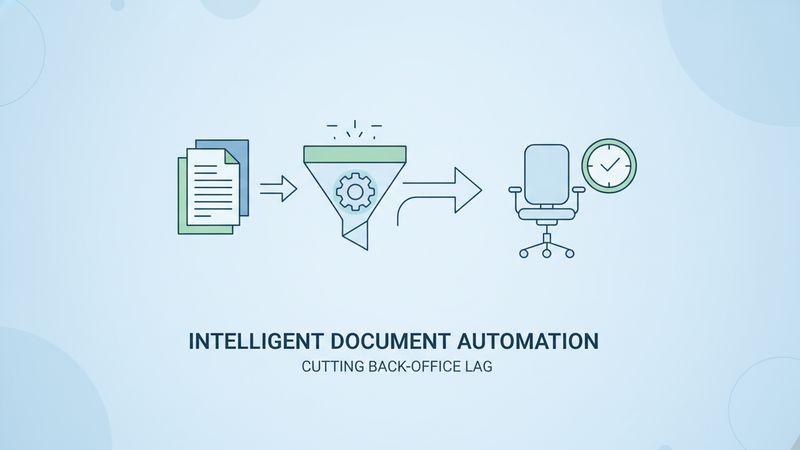
Intelligent Document Automation: Cutting Back-Office Lag
Manual paperwork and fragmented reviews drain operating margins. Discover how intelligent workflow automation cuts cycle times and delivers measurable ROI.