Intelligent Document Automation: Cutting Back-Office Lag
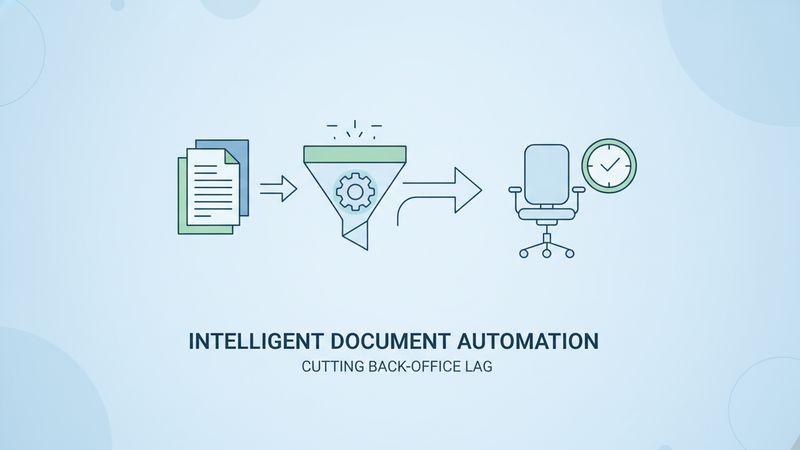
Manual paperwork and fragmented reviews drain operating margins. Discover how intelligent workflow automation cuts cycle times and delivers measurable ROI.
For growing Canadian enterprises, operational friction rarely announces itself with a sudden system crash. Instead, it quietly erodes profitability across hundreds of manual hand-offs every day: accounts payable teams transcribing unstructured PDF invoices, operations managers cross-referencing shipping manifests against legacy ERPs, and compliance officers manually validating client onboarding records. While leadership teams have spent the past two years experimenting with general generative AI tools, the operational reality on the ground remains largely unchanged. According to the CDW Canada 2026 Canadian AI Workspace Trends Report, 58% of organizations now have approved AI tools in place, yet only 38% track concrete financial KPIs to measure return on investment. The next frontier of competitive advantage is not another chatbot—it is intelligent workflow automation designed to eliminate back-office drag and connect legacy infrastructure directly to bottom-line execution.
The Fragmented Process Trap: Why Basic Digitization Falls Short
Many mid-market executives assume their back-office is automated simply because they no longer use paper filing cabinets. However, replacing paper with static PDFs and disconnected cloud spreadsheets merely shifts manual labor to digital screens. When employees spend 20% to 30% of their working hours copying data between web portals, verifying line items, and resolving email exceptions, your business is paying a substantial manual processing tax.
Traditional Robotic Process Automation (RPA) promised to fix this issue a decade ago, but rule-based screen scraping is brittle. A slight change in a vendor’s invoice layout or an unexpected field format causes basic bots to fail, triggering immediate human intervention. Modern intelligent automation moves beyond rigid scripts by combining cognitive machine learning, natural language processing, and automated orchestration. Instead of simply extracting characters, modern workflows interpret document context, reconcile discrepancies against backend databases, and execute multi-step transactions across core business systems without human intervention.
Real-World Business Impact: A GTA Logistics and Distribution Scenario
Consider a mid-sized supply chain and distribution company based in the Greater Toronto Area processing roughly 4,500 supplier invoices and customs manifests each month. With operations split between a legacy on-premise ERP and modern cloud inventory tools, a dedicated team of five full-time coordinators spent over 30 hours per week manually matching purchase orders, checking line-item pricing discrepancies, and routing approval emails.
By deploying end-to-end intelligent document processing integrated directly into their existing data pipelines, the company achieved measurable operational improvements within four months:
- 65% Reduction in Cycle Times: Invoice processing and approval turnaround dropped from 4.5 business days to under 4 hours, unlocking early-payment supplier discounts.
- 90%+ Straight-Through Processing: Standard purchase order matches were verified and committed to the general ledger automatically, allowing staff to focus solely on high-value exceptions.
- Zero Headcount Expansion During Growth: The company expanded transaction volume by 28% year-over-year without adding administrative headcount, protecting operating margins.
As highlighted in industry analysis by Tungsten Automation, total cost of ownership in automation must be evaluated alongside fully loaded processing costs, cycle times, and exception rates. When built purposefully around core business bottlenecks, intelligent workflows deliver rapid payback periods and durable operational resilience.
Identifying High-ROI Automation Opportunities in Your Organization
Executive teams looking to implement intelligent automation should avoid broad, unfocused deployments. Automation creates the greatest economic value where transaction volumes are heavy, error costs are severe, and manual steps repeatedly slow customer delivery. Key operational areas ripe for high-ROI automation include:
- Finance & Accounts Payable: Automated classification, PO matching, tax calculation, and exception routing across diverse supplier formats.
- Customer & Vendor Onboarding: Instant identity verification, credit checks, and automated ingestion of compliance documentation directly into CRM and ERP systems.
- Claims and Order Processing: Real-time ingestion and validation of inbound claims, order forms, and contracts with built-in audit trails.
- Cross-System Inventory & Logistics: Synchronizing warehouse feeds, transportation management data, and partner portals without fragile manual exports.
According to SIDGS Enterprise Automation Insights, the most successful intelligent enterprise implementations share clean process boundaries, human-in-the-loop exception handling, and robust integration with existing software systems.
Action Plan: Moving from Piecemeal Software to Orchestrated Efficiency
To capture tangible returns on technology investments, leadership teams should execute a phased strategy:
- Map the Friction Baseline: Identify the single recurring workflow that consumes the most human hours each week. Quantify the fully loaded labor cost, error rate, and average processing delay.
- Avoid Off-the-Shelf Point Tool Bloat: Buying standalone SaaS subscriptions for every small task creates integration silos. Build unified workflows that interact directly with your existing infrastructure through resilient APIs and custom connectors.
- Design for Human-in-the-Loop Governance: Establish clear business rules where routine transactions execute autonomously while edge cases and high-risk anomalies are routed seamlessly to human supervisors.
- Partner for Strategic Implementation: Mid-market organizations rarely need to build massive internal AI engineering teams to deploy world-class automation. Partnering with experienced software development teams accelerates time-to-value while avoiding costly architectural false starts.
At Arepitas Technologies Inc, we partner with business leaders across Toronto, Ontario, and Canada to replace fragile, manual processes with robust custom applications and intelligent workflows. Whether you need to integrate legacy systems, streamline high-volume document pipelines, or build scalable operational platforms, explore our tailored consulting and development solutions at /services to turn back-office overhead into a long-term competitive advantage.
Sources
Need help with ai & automation?
Arepitas Technologies Inc helps companies in Toronto build software, AI features, and digital products that scale.
Book a Free ConsultationRelated Articles
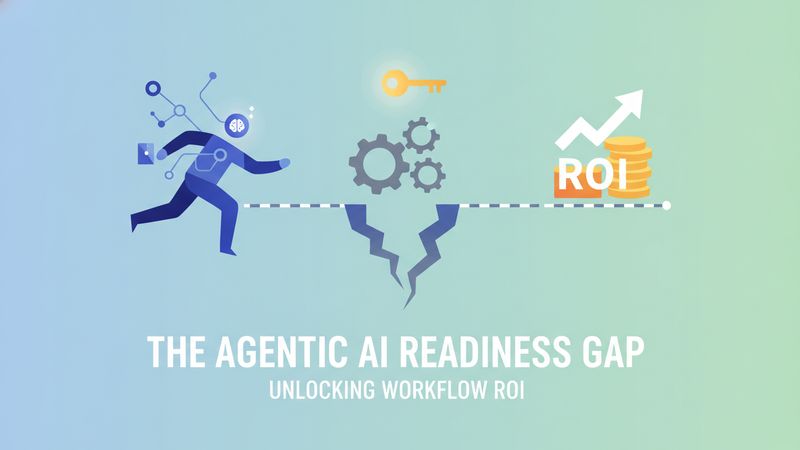
The Agentic AI Readiness Gap: Unlocking Workflow ROI
While Canadian firms rush toward autonomous workflows, a 97% agentic AI readiness gap risks millions in value. Here is how leaders close it for real ROI.
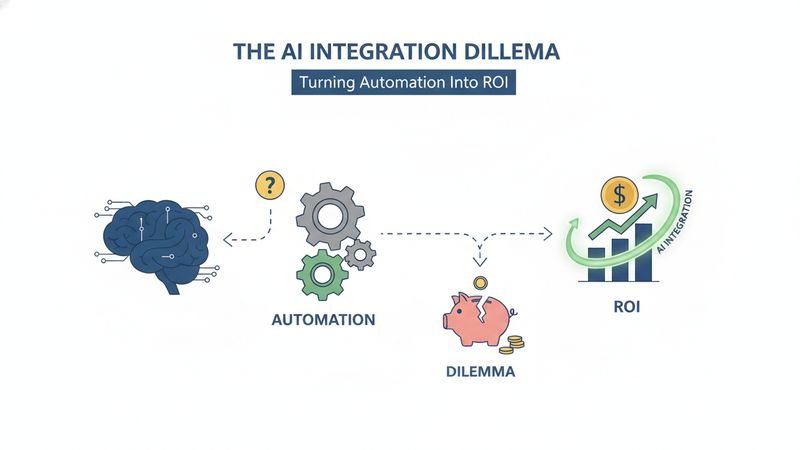
The AI Integration Dilemma: Turning Automation Into ROI
Canadian mid-market leaders are moving past experimental AI chatbots. Discover how connected agentic workflows eliminate hidden costs and drive measurable ROI.
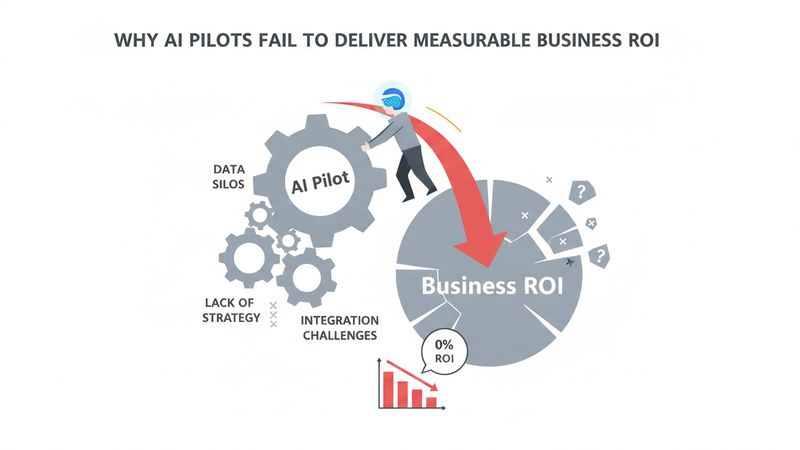
Why AI Pilots Fail to Deliver Measurable Business ROI
Nearly half of Canadian businesses are trapped in AI pilots with no ROI. Here is how operational redesign turns disconnected tech into measurable profit.