The Agentic AI Readiness Gap: Unlocking Workflow ROI
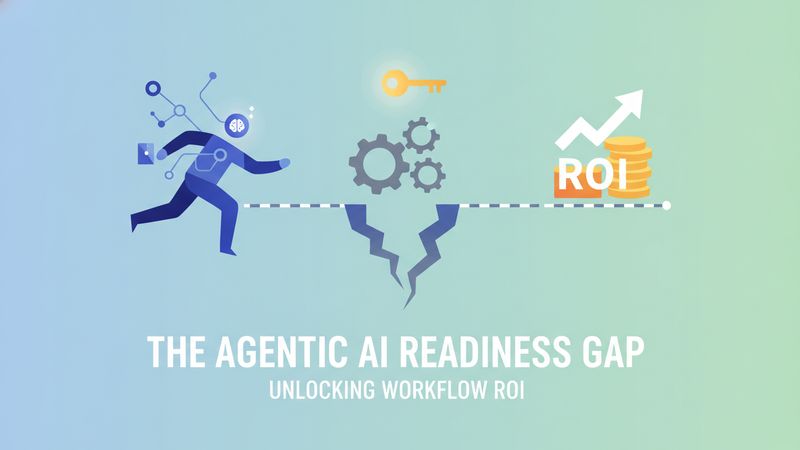
While Canadian firms rush toward autonomous workflows, a 97% agentic AI readiness gap risks millions in value. Here is how leaders close it for real ROI.
Enterprise leaders are witnessing a fundamental pivot from conversational chatbots to autonomous agents that plan, reason, and execute multi-step operations across internal software. However, closing the agentic AI readiness gap has become the defining operational challenge for executive teams this year. A landmark SAP and Oxford Economics study revealed that while two-thirds (66%) of Canadian enterprises are actively piloting autonomous agent systems, a staggering 97% admit they lack the foundational data architecture, governance, and system integration required to run them safely. This readiness shortfall puts an estimated CA$20.2 million in projected two-year returns per organization directly on the line.
For executives across Canada, the conversation has moved past whether artificial intelligence can write text or summarize meetings. The real question is whether enterprise systems are structurally prepared to let autonomous agents execute business-critical actions without manual babysitting or costly failure.
The Shift from Prompting to Autonomous Execution
For the past two years, enterprise automation focused on human-prompted copilots. While these tools offered marginal personal productivity gains, they failed to transform organizational throughput because they still required a human operator at every step.
Agentic AI represents a distinct structural evolution. Rather than waiting for instructions, domain-specific AI agents observe events, chain together logical steps, call APIs across disparate software tools, and drive business outcomes to completion. According to Gartner's agentic AI research, over 80% of tangible financial return from agent deployments will come not from broad, general-purpose assistants, but from specialized, domain-specific agents integrated into core transactional workflows.
Consider the practical differences across everyday operations:
- Legacy Rule-Based Automation: Stops the moment an invoice format deviates by a single field or an edge case appears, dumping the exception into a manual queue.
- Generative Assistants: Summarizes the discrepancy for an employee, but still requires the worker to log into the ERP, verify warehouse records, issue adjustments, and email the vendor.
- Agentic Workflows: Autonomous agents detect the mismatch, query logistics databases, cross-reference vendor agreements, make authorized reconciliations within predefined policy boundaries, and post finalized audit records directly to financial ledgers.
When implemented effectively, McKinsey's State of AI data shows that organizations scaling workflow agents achieve cycle-time reductions of 20% to 60% across back-office operations. However, reaching that outcome requires fixing the friction points that cause 40% of pilot programs to stall.
Why Unprepared Enterprises Hit a Productivity Wall
Why do 97% of Canadian organizations report being unready for autonomous workflows? The hurdle is rarely the intelligence of underlying large language models. The breakdown occurs at the interface between agentic software and existing enterprise infrastructure.
1. The "Finish Line" and Settlement Bottleneck
An autonomous agent can analyze data, propose an action, and draft transactions in seconds. However, value is created only at the "finish line"—the moment the action settles into an authoritative, binding business state that downstream databases, regulatory frameworks, and counterparties accept. When legacy ERPs or custom portals lack secure, bi-directional APIs, human employees are forced to manually verify and enter data, creating a costly bottleneck that erodes ROI.
2. Siloed, Unstructured Data Foundations
Autonomous agents rely on real-time enterprise context to make accurate decisions. When customer records, pricing tables, inventory levels, and contract terms are trapped in disconnected SaaS silos or legacy on-premises databases, agents hallucinate assumptions or repeatedly fail verification steps, leading management to pull the plug.
3. Missing Guardrails and Agent Governance
Delegating execution to software requires strict policy-as-code controls. Without role-based access limits, step-level observability, and deterministic fallbacks, leadership cannot grant agents permission to execute high-value transactions like issuing purchase orders, releasing shipments, or processing claims.
Real-World Scenario: The Logistics Bottleneck
Consider a mid-sized supply chain distributor in the Greater Toronto Area managing 350 shipping exceptions a day across freight carriers, customs brokers, and warehouse depots. Individual staff members spent up to 25 minutes per incident toggling between legacy green-screen inventory systems, modern freight tracking web portals, and email threads.
When the team initially layered off-the-shelf chatbot tools onto their stack, resolution times barely budged because the assistant could not safely commit changes to their legacy dispatch database. Only after standardizing their internal APIs and deploying domain-specific workflow agents with bounded settlement authority did exception resolution drop from 25 minutes to under two minutes per case, unlocking hundreds of thousands in operational savings.
How Business Leaders Can Close the Readiness Gap
To capture tangible returns on automation investments, executive teams must approach agentic implementation as an engineering and architecture priority rather than a novelty software rollout. Forward-thinking organizations are taking four concrete actions:
- Audit API and Tool Readiness: Identify the high-friction operational workflows in your business that span three or more disconnected applications. Build robust, secure API layers and micro-endpoints so agents can read and write data reliably.
- Prioritize Domain-Specific Use Cases: Avoid broad "do-everything" company bots. Focus initial deployments on high-volume, rules-bounded processes—such as billing reconciliations, claims processing, customer order status routing, or vendor compliance verification.
- Implement Deterministic Guardrails: Set explicit financial and operational thresholds. Allow agents to execute low-risk actions autonomously while routing high-dollar exceptions or low-confidence edge cases directly to human supervisors with full context attached.
- Design for Multi-System Settlement: Ensure that every automated workflow concludes with an immutable audit log and authoritative update in your system of record, eliminating secondary manual confirmation.
Building the Infrastructure for Autonomous Growth
Autonomous workflows are quickly shifting from experimental pilots into core operational infrastructure. Companies that build unified data pipelines, clean API integrations, and robust governance models will see compounding efficiency gains, while competitors remain bogged down in manual data hand-offs.
Closing this technical readiness gap requires specialized systems integration and custom engineering. Through comprehensive software modernization and API enablement available via our consulting and development services, Arepitas Technologies Inc helps Toronto and Canadian enterprises modernize legacy architectures, connect disparate platforms, and deploy reliable, domain-specific automation systems engineered for measurable business ROI.
By laying the proper technical foundations today, leadership teams can move past pilot fatigue, bridge the readiness divide, and transform enterprise automation into a lasting competitive advantage.
Sources
Need help with ai & automation?
Arepitas Technologies Inc helps companies in Toronto build software, AI features, and digital products that scale.
Book a Free ConsultationRelated Articles
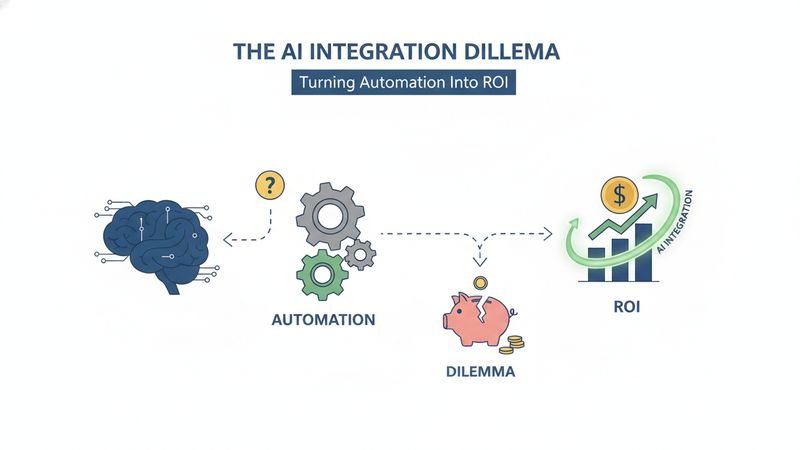
The AI Integration Dilemma: Turning Automation Into ROI
Canadian mid-market leaders are moving past experimental AI chatbots. Discover how connected agentic workflows eliminate hidden costs and drive measurable ROI.
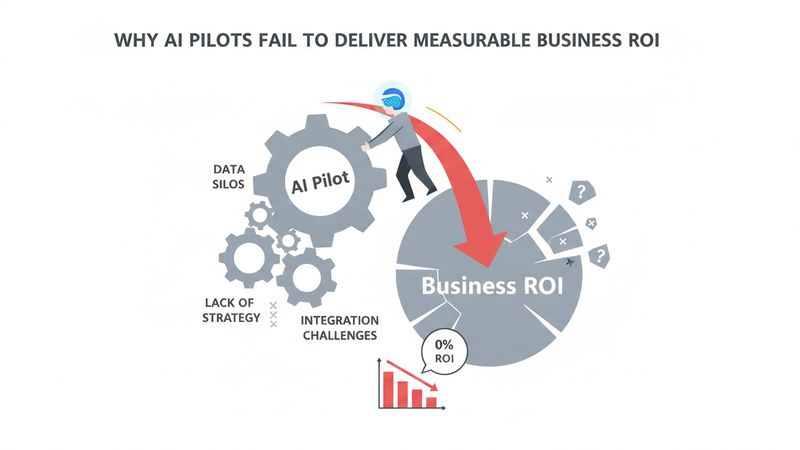
Why AI Pilots Fail to Deliver Measurable Business ROI
Nearly half of Canadian businesses are trapped in AI pilots with no ROI. Here is how operational redesign turns disconnected tech into measurable profit.
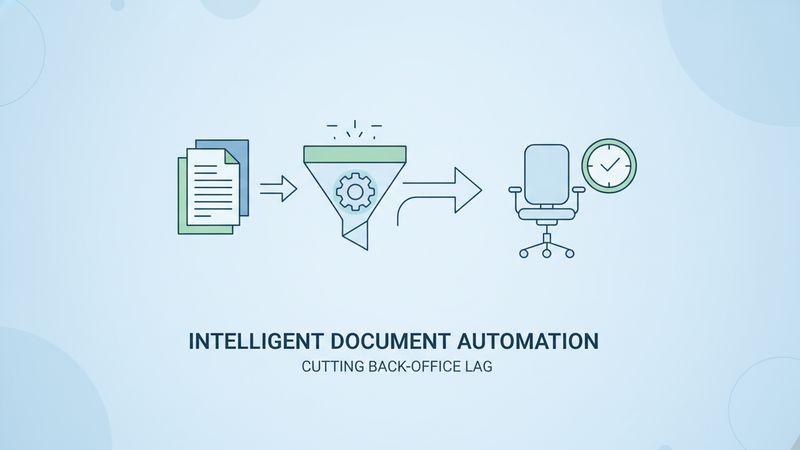
Intelligent Document Automation: Cutting Back-Office Lag
Manual paperwork and fragmented reviews drain operating margins. Discover how intelligent workflow automation cuts cycle times and delivers measurable ROI.