ERP Modernization: How AI Is Unlocking Legacy Core Systems
Discover how enterprises are leveraging AI-driven ERP modernization to decouple legacy tech debt, curb runaway cloud costs, and unlock critical business data.
Enterprise leaders are confronting a stark operational reality: the digital transformation promises of the past decade are grinding against the immovable weight of monolithic architecture. As organizations strive to deploy real-time analytics and generative workflows, ERP modernization has shifted from a scheduled IT lifecycle upgrade into an urgent strategic mandate. Decades of accumulated customizations, proprietary database formats, and tightly coupled business logic have turned legacy Enterprise Resource Planning (ERP) and core mainframe backbones into major bottlenecks that stall innovation and inflate cloud operational costs.
According to an executive analysis on ERP Modernization in 2026: What Every Leader Needs to Know, traditional ERP upgrades—which merely patch existing on-premises software—fail to deliver the modularity, real-time data access, and API-driven flexibility modern enterprises require. To break free from technical paralysis, enterprise IT leaders are turning to AI-assisted reverse engineering and phased core modernization to unlock legacy systems without taking on devastating operational downtime.
The Anatomy of the Legacy Core Bottleneck
For most Global 2000 companies and regional enterprises across North America, the core transactional engine still resides in deeply entrenched legacy platforms or mainframe systems running millions of lines of procedural code. While these transactional systems are exceptionally stable for routine processing, they create severe headwinds when interfaced with modern cloud platforms.
Proprietary Formats and Trapped Data
Legacy core platforms frequently store business records in flat files, hierarchical structures, or non-relational database formats that modern cloud engines cannot readily parse. When data engineering teams attempt to build unified data pipelines or Retrieval-Augmented Generation (RAG) systems, they find critical enterprise knowledge trapped inside undocumented database schemas.
The Custom Code Trap and Tribal Knowledge
Over decades of software iteration, internal teams have layered complex business rules, pricing models, and compliance checks directly into monolithic codebases. As key architects retire, this institutional knowledge becomes obscured. Engineering teams face significant risks when modifying legacy routines, leading to project freezes and stalled digital transformation roadmaps.
Rising Cloud Consumption and Inefficient Lift-and-Shift
To accelerate modernization, many organizations previously attempted "lift-and-shift" migrations to public hyperscalers. However, hosting monolithic workloads in cloud environments without refactoring often causes cloud infrastructure bills to balloon while failing to deliver elasticity. Research from CIO Dive notes that despite massive global investments approaching $64 billion in enterprise AI platforms, nearly 72% of executives report scaling less than a quarter of their digital initiatives due to legacy integration friction and an inability to realize expected cost savings.
How Generative AI Is Re-Engineering Legacy Migration
Historically, enterprises faced a high-risk binary choice: preserve aging systems indefinitely or execute a multi-year "big bang" replacement that frequently ran over budget. Today, AI-powered modernization frameworks are rewriting this equation by operationalizing code analysis and automated refactoring.
As explored by the Google Cloud Blog, modern legacy transformation is moving far beyond superficial syntax translation. Generative models and abstract syntax trees (ASTs) now allow automated systems to reconstruct business rules directly from legacy code, decoupling dependencies before writing a single line of target architecture.
Key advancements enabling this shift include:
- Automated Code Reverse Engineering: Specialized language models scan millions of lines of legacy code to map complex dependency trees, generate comprehensive API documentation, and isolate proprietary business logic.
- Schema Modernization and Semantic Decoupling: AI accelerators map legacy data structures directly into cloud-native relational or vector databases, preserving data integrity without manual schema rewriting.
- Automated Test Harness Generation: Generative AI models produce synthetic test cases and regression suites that validate functional equivalence between legacy modules and new microservices, drastically lowering migration risks.
- Composable API Facades: Rather than rewriting entire suites at once, enterprises use AI tools to generate secure API layers over legacy transactional monitors, allowing modern cloud apps to query mainframe backends safely.
Recent market research from IBM Canada highlights that while 90% of executives are embedding AI across business operations, only those who systematically modernize core data pipelines and technical governance achieve positive returns.
Strategic Blueprints for Phased Modernization
Modernizing core systems without operational disruption requires a disciplined engineering roadmap. Organizations successfully navigating this transformation follow a phased, risk-managed modernization pattern.
1. Granular System Discovery and Value Stream Mapping
Before refactoring code, IT leaders conduct automated portfolio assessments to identify high-value modules versus dormant routines. AI discovery engines pinpoint interdependencies, identifying isolated domains—such as inventory tracking or customer lookup—that can be decoupled first.
2. The Strangler Fig Architecture
Rather than executing full system switchovers, high-performing enterprises leverage the strangler fig application pattern. Legacy functionalities are incrementally replaced with cloud-native microservices running alongside the existing core. As traffic shifts toward new microservices, the old core codebase shrinks systematically over time.
3. Integrated Data Governance and Hybrid FinOps
Core modernization must be tied to granular infrastructure metrics. Engineering teams should deploy FinOps observability tools to track unit transaction costs across hybrid environments, preventing unplanned compute spikes as workloads shift to the cloud. Discover how our end-to-end digital transformation /services help enterprises design scalable hybrid architectures and modernize complex enterprise software.
Building a Scalable, AI-Ready Enterprise Core
ERP modernization is no longer an isolated back-office infrastructure project; it is the foundational requirement for sustainable enterprise agility. Organizations that remain shackled to undocumented legacy systems risk escalating maintenance costs, rising operational vulnerabilities, and falling behind more agile market competitors.
By leveraging AI-assisted code refactoring, establishing modular API architectures, and embracing incremental decomposition, technology leaders can transform their most rigid technical debt into a resilient, cloud-ready digital core.
Sources
Need help with enterprise software?
Arepitas Technologies Inc helps companies in Toronto build software, AI features, and digital products that scale.
Book a Free ConsultationRelated Articles
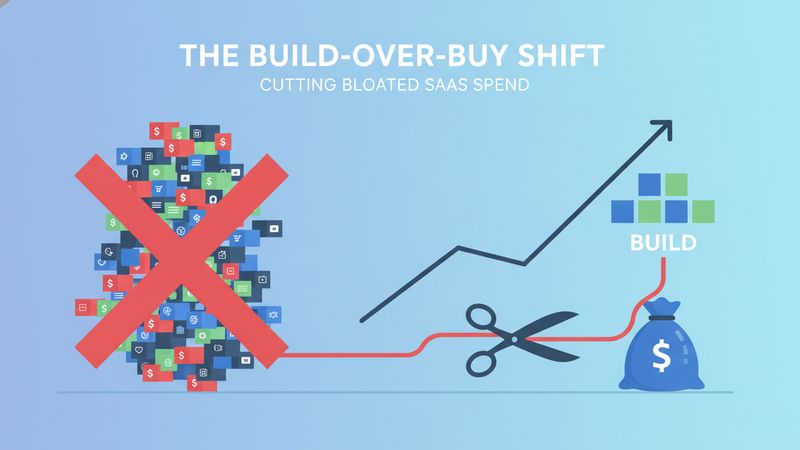
The Build-Over-Buy Shift: Cutting Bloated SaaS Spend
Discover why Canadian mid-market leaders are replacing redundant SaaS subscriptions with targeted custom internal tools to eliminate seat-tax bloat and boost ROI.
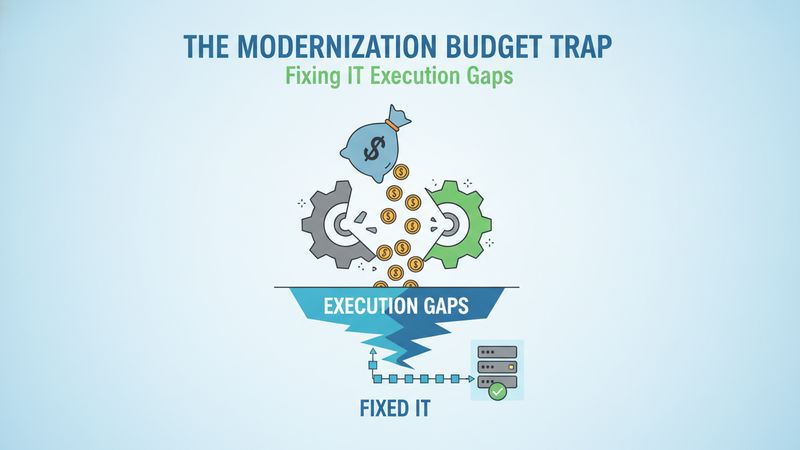
The Modernization Budget Trap: Fixing IT Execution Gaps
Over 70% of enterprise modernizations blow past budgets. Discover why Canadian mid-market leaders are shifting from monolithic overhauls to targeted execution.
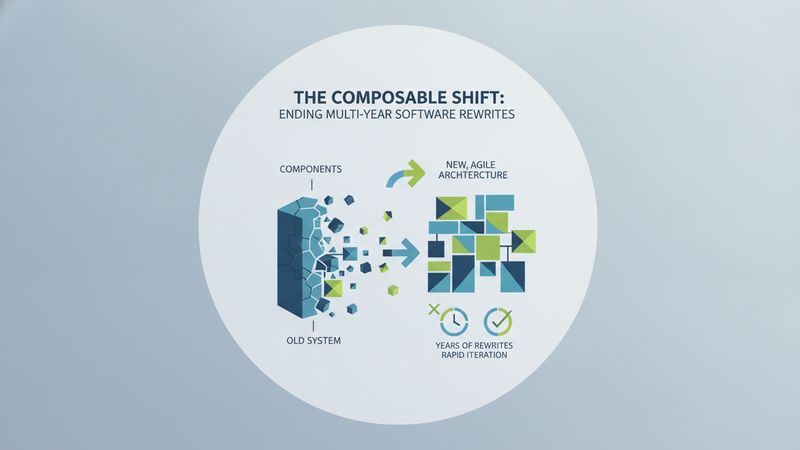
The Composable Shift: Ending Multi-Year Software Rewrites
Discover how composable enterprise software helps Toronto leaders modernize legacy workflows incrementally, cutting cycle times and avoiding costly overhauls.